Evolution of an Image – CP Freight Car Paint Schemes

Like any company or institution that’s been around for a long time, Canadian Pacific has gone through a number of image and branding changes over the years. This article will look at the various rolling stock paint schemes used by Canadian Pacific over the last century.

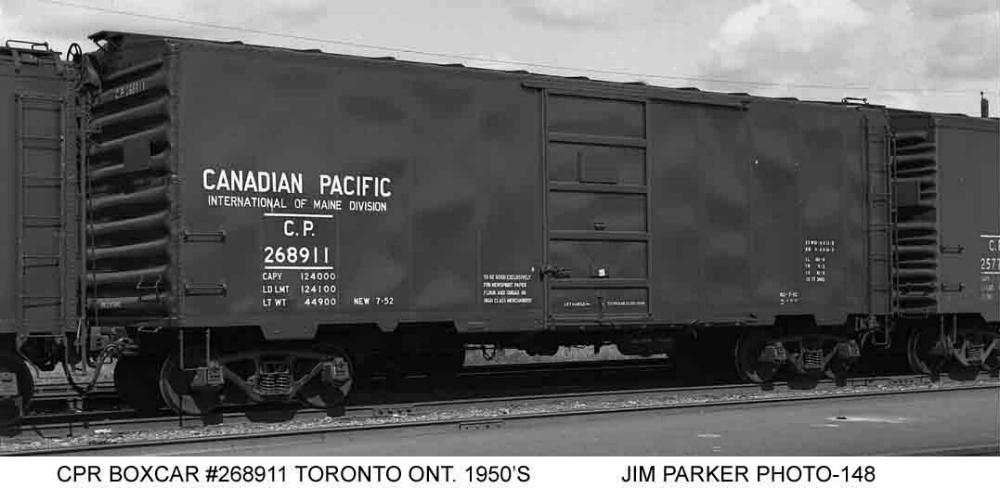
Early Block (<1951)

CP’s lettering standard from the early half of the 20th century featured the Canadian Pacific name in simple gothic block lettering. There were variations in how this lettering was positioned depending on the car type or era, but they all used the same stencils and this was more or less standard from at least the WWI through WWII periods.

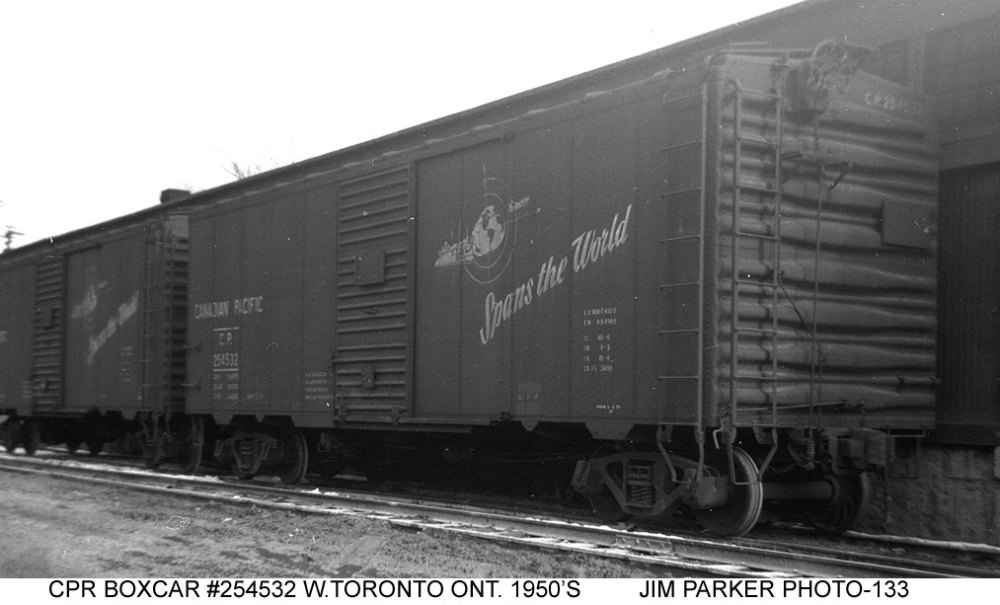
CP Spans the World (1947-1951)

Starting in 1947, this “CPR Spans the World” herald and slogan were introduced by CPR’s marketing highlighting CP’s steam ship connections that connected the railway to Europe and Asia. A number of boxcars repainted during 1947-1950 received this herald prominently applied to the right of the car side. Otherwise, the lettering was identical to the previous standard “block” lettering scheme, just with the addition of the “Spans the World” herald.

Due to the size and prominence of the herald, this was only applied to boxcars, with no change to the paint scheme on any other type of car.

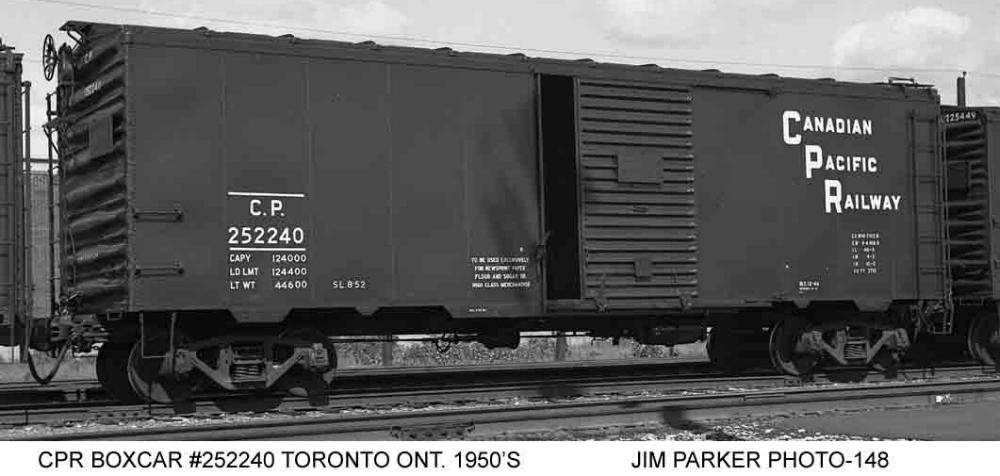
Stepped Gothic (1951-1962)

CP’s standard boxcar scheme throughout the 1950s featured the railway’s name in “stepped” offset rows on the right hand side of the car, with the “CPR” initials prominently emphasized. Even though unaffiliated with the CPR at the time, the Pacfic Great Eastern and Toronto, Hamilton & Buffalo railways would also copy this idea, introducing their own similar lettering schemes with stepped lettering.

Like the late 1940s “Spans the World” graphic, this was only applied to “house” cars like box cars and refrigerators, with other car types like hoppers, gondolas, and cabooses continuing to carry the simple block lettering above.

A minor change to this scheme would come in 1957 when the horizontal white lines above and below the car number, previously an AAR standard, were discontinued.

The Script Era (1963-1969)

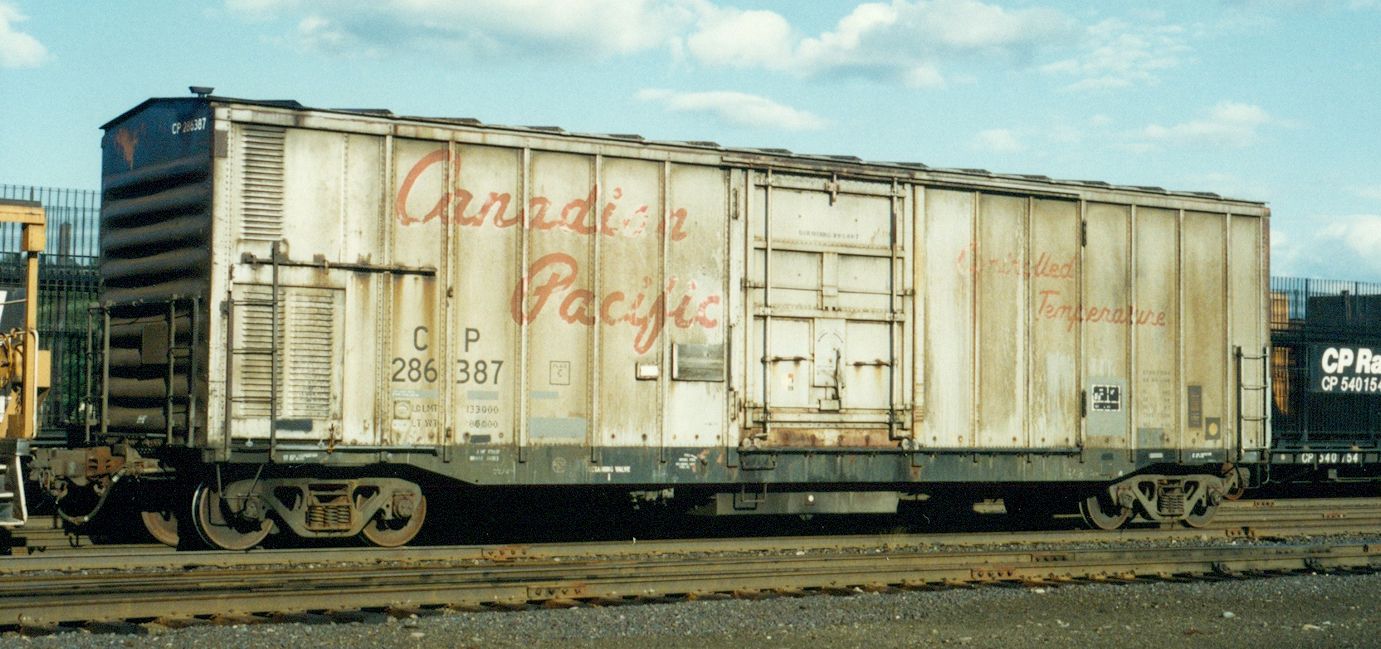
CP had used a version of script lettering in marketing logos going back to the early 20th century, but in the early 1960s the script lettering was revised and the railway’s image updated to make wide use of it as their primary branding, applying the new lettering to locomotives, freight cars, cabooses, ships and trucking divisions, and all company paper work.

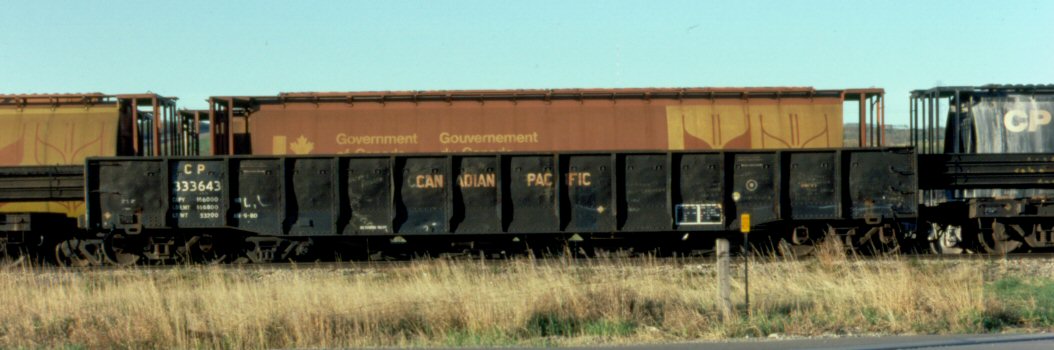
Freight car colours remained the same: brown for box and other “house” cars, and black for open cars like flatcars, gondolas, and hoppers. Cabooses remained brown with red ends. Only the logos applied to the cars changed.

This lettering change was applied to most car types on the CPR except for flatcars, which continued to use the simple block lettering as the script lettering would not fit on this type of car. Also while some groups of new gondolas delivered later in the 1960s were delivered in the new script lettering, CP shops were loath to actually do any painting of the script lettering over car ribs, and there is little or no evidence of actual CP shop repaints of any cars with external bracing with script lettering.

A Colourful Introduction (1967-1968)

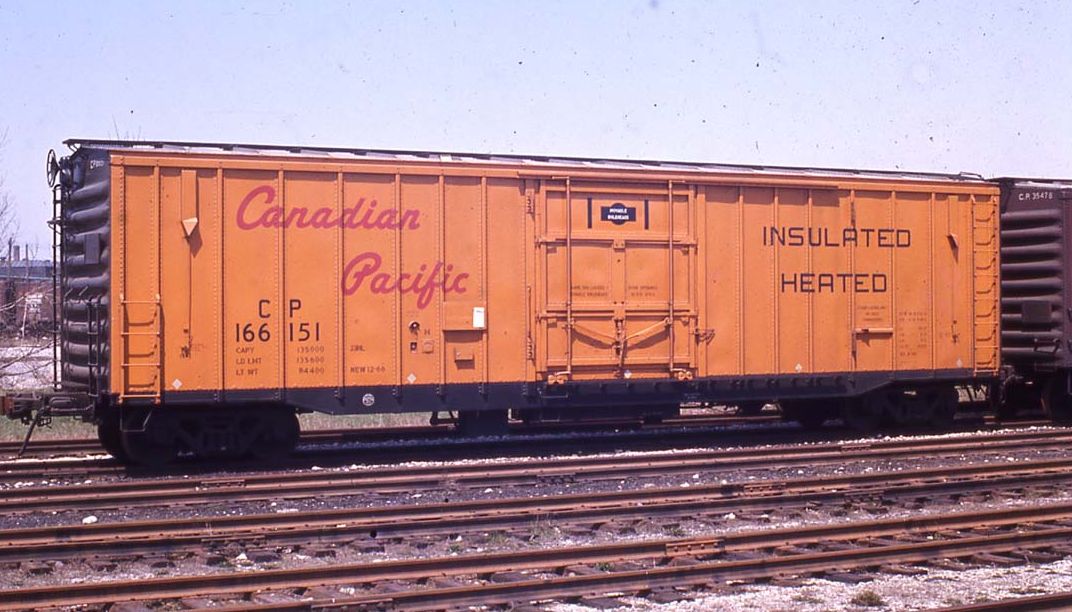
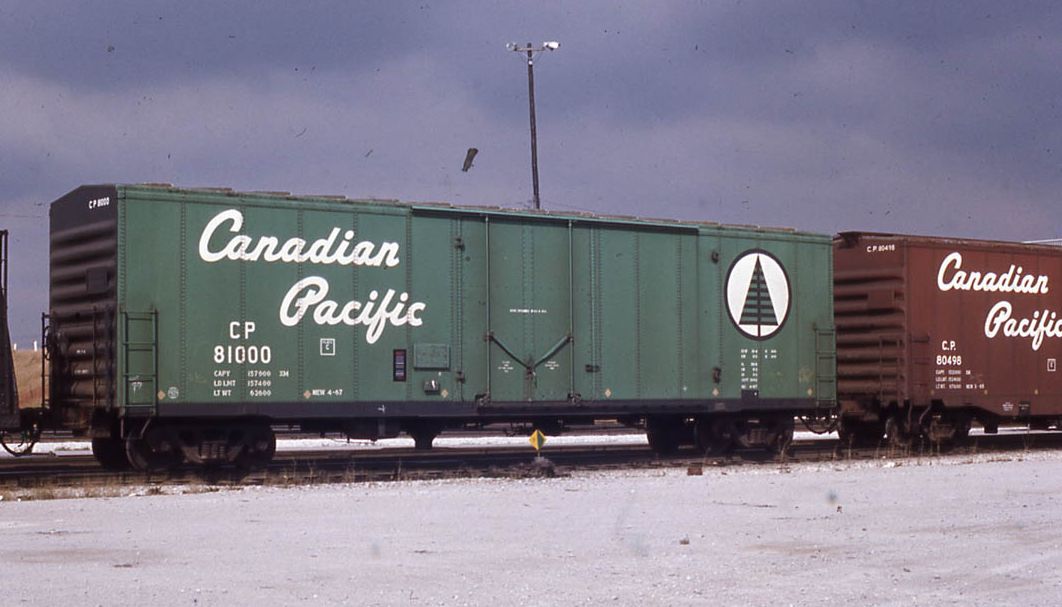
Starting in 1966 CP started to modify their script scheme for several large purchases of new freight cars in the late 1960s. The size of the reporting marks and car numbers were increased and the font modified slightly. They also introduced bold colour coding to several types of cars (mainly box type cars).

New mechanical refrigerator cars were painted silver with red lettering. Insulated heated boxcars were painted a striking yellow-orange with red script. And a large group of boxcars dedicated to paper service were delivered in a jade green scheme with a large pine tree graphic.

Cabooses also got a colourful upgrade, with several cabooses repainted during this period into a bright red with yellow ends. However due to the short-lived period these paint schemes were applied, no existing freight cars are ever known to have been repainted in similar schemes to any of the above cars. These schemes only appeared on newly built cars.

Flatcars, gondolas, and hoppers (other than a group of pressure-differential unloading hoppers which were painted in a silver and black scheme) remained black, but deliveries from around 1967 can be noted for the subtle change in the reporting mark/number font and size.

The CP Rail Era (1969-1987)

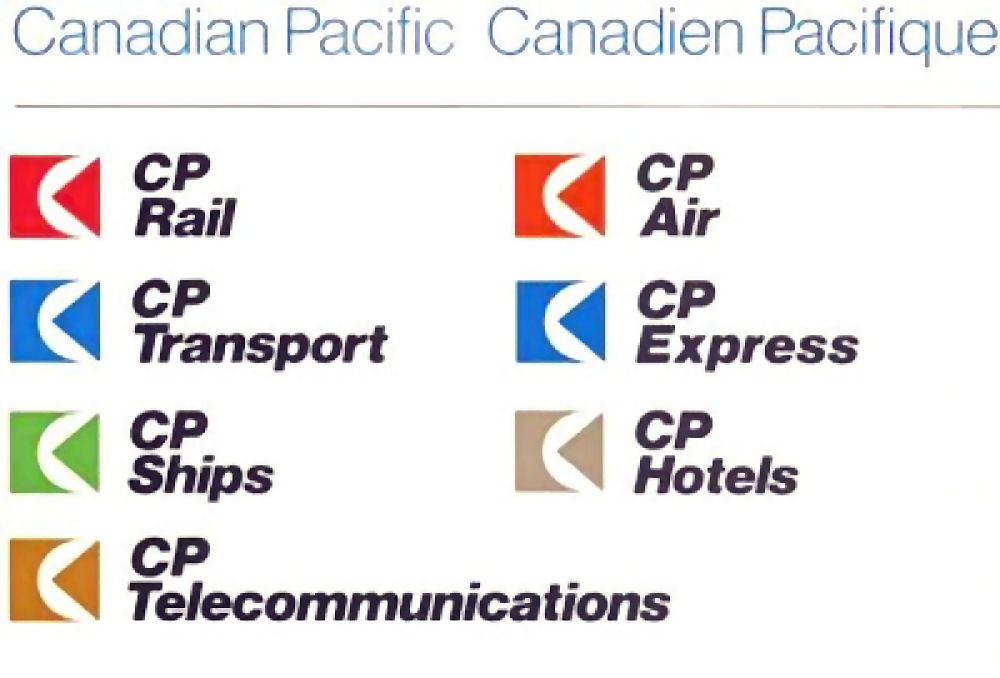
In October 1968, Canadian Pacific introduced their most radical rebranding in company history. All of the company’s divisions dropped the classic script lettering, and adopted a unified branding with a new name consisting of the parent company’s “CP” initials followed by the division name, and new logo called the “MultiMark”, with each division using the same logo but with their own colour. Canadian Pacific Railway became “CP Rail”, and adopted red as their primary colour. (The specific shade of red to become known as “Action” red.)

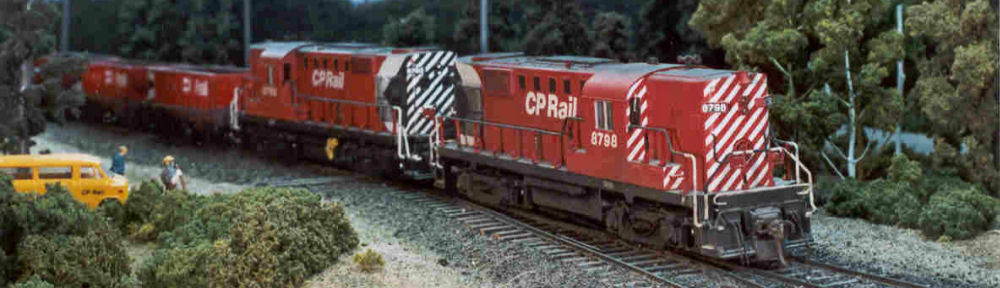
On the railway, this lead to a radical change in the colour landscape, with maroon and grey locomotives giving way to red (although note the black locomotive model in lead graphic in this section – this was the original proposal which CP management rejected) and brown and black freight cars shifting to brighter colours.

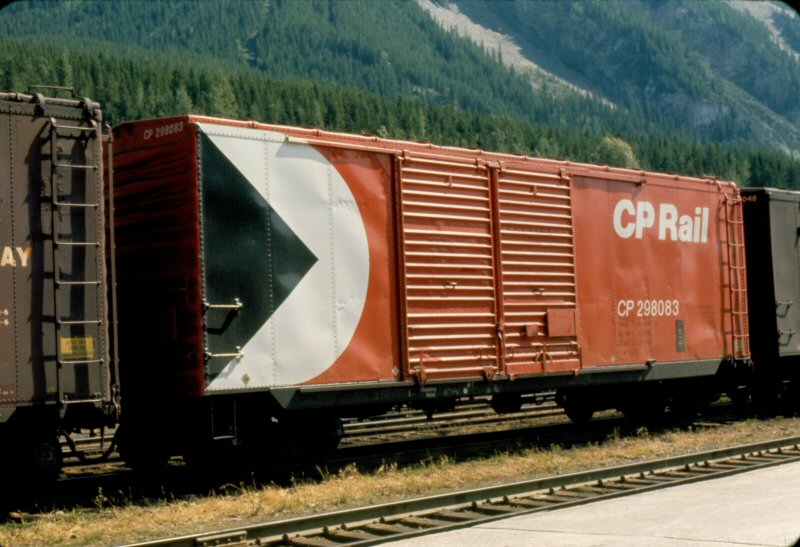
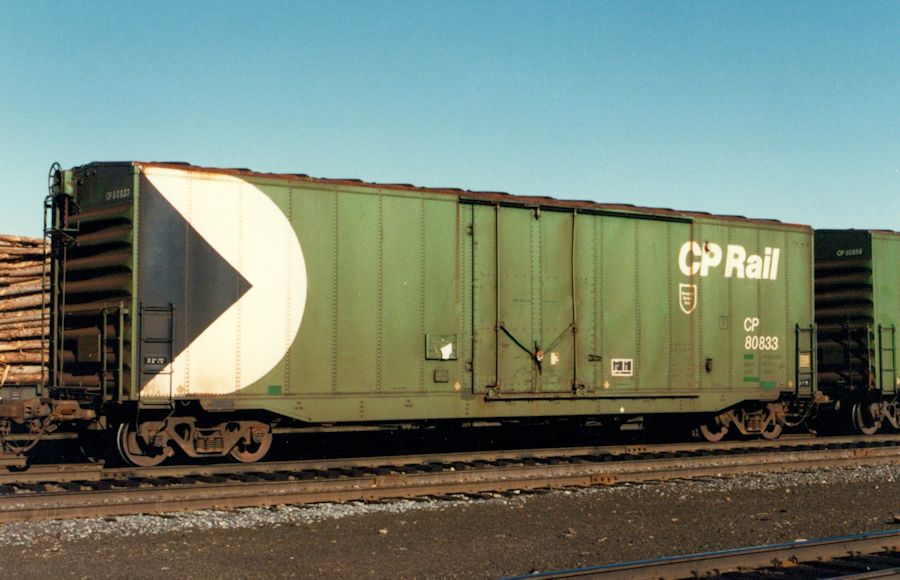
Locomotives and most freight equipment (boxcars, gondolas, and flatcars) was painted in the CP Rail “Action Red” colour which was adopted as the railway’s primary colour, matching the locomotives. The company’s bold new black and white “MultiMark” logo was applied at one end of the car covering the full height of the car side. (The paint standard had the MultiMark at the “B” (handbrake) end of the car, although many boxcar repaints just put it to the left of the car side as it was easier to mask over a pair of grabs than a full ladder.) Early box car repaints featured a contrasting black lower sill, which was dropped on later repaints which just kept the lower sill the same colour as the rest of the body.

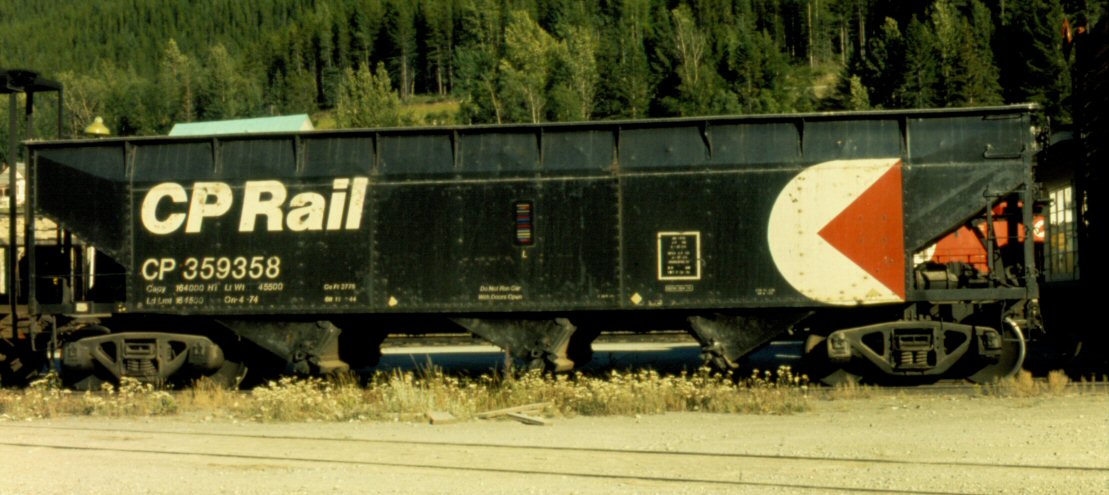
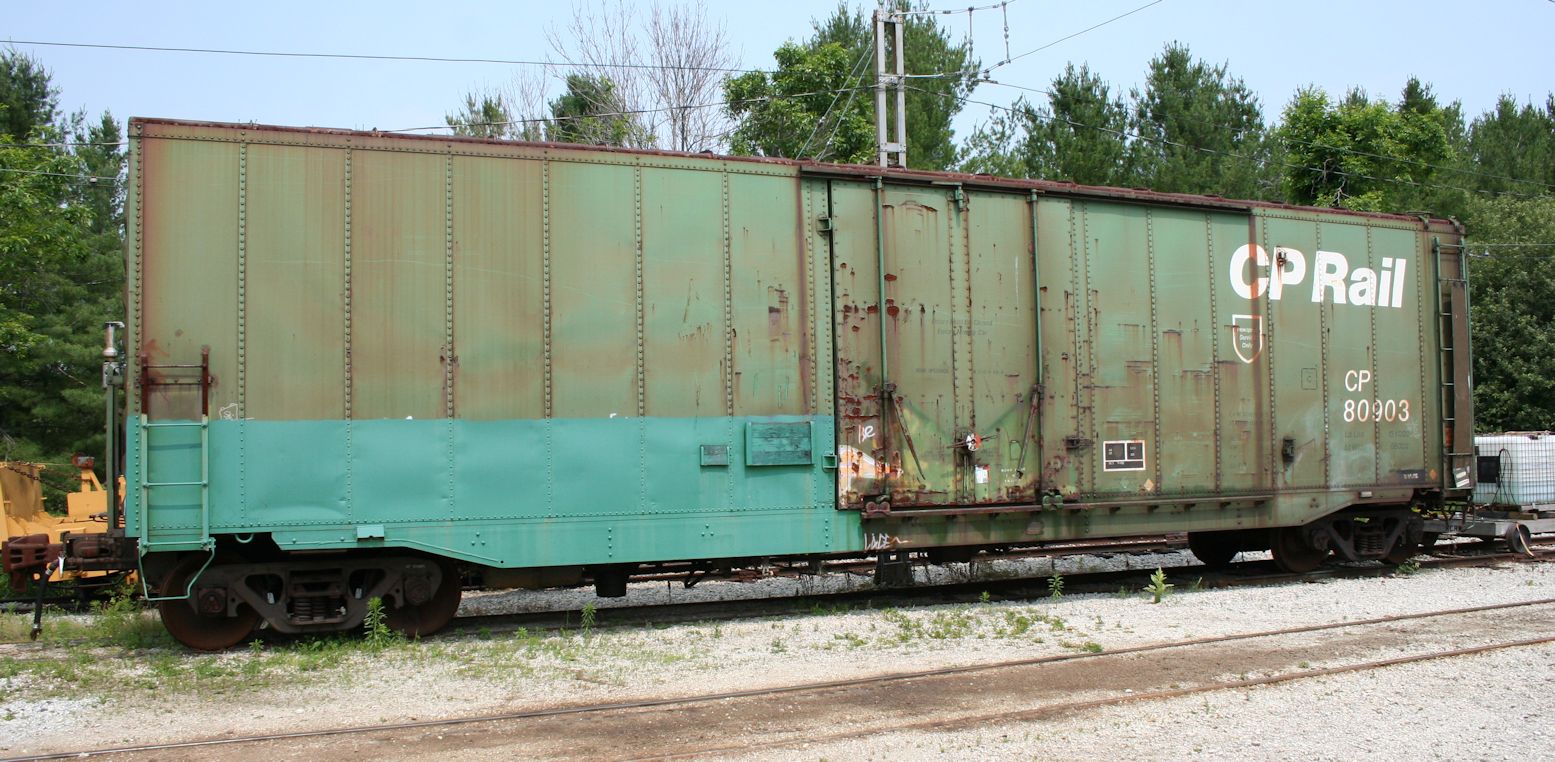
Several other colours were used however. Following the colour coding introduced with the 1967 schemes above, paper service assigned boxcars received a green paint scheme, insulated heated cars as well as cabooses were yellow, and refrigerator cars were painted silver. Hopper cars were still painted black. The last two car types received a modified version of the MultiMark, with Action Red used instead of black for the triangle in the logo.

Interestingly, the “CP Rail” brand also started a trend among other unrelated Canadian Railways, with British Columbia Railway renaming itself “BC Rail” in the early 1980s, Canadian National briefly experimented with “CN Rail” branding in the late 1980s, and Ontario Northland introduced a bold new “ON Rail” image for their locomotive paint scheme in the early 2000s.

The Loss of the MultiMark (1987-1996)

The MultiMark logo lasted for almost 20 years before CP decided to remove it from their branding in late 1987. (The first locomotive to be outshopped in a new paint job without the MultiMark was in November 1987.)

While the “CP Rail” name and branding would still last another decade before reverting back to a version of “Canadian Pacific” branding, the MultiMark symbol was now a thing of the past. In the early 1990s, CP would modify their CP Rail logo to “CP Rail System” featuring a split Canadian and US Flag (known to railfans as the “Dual Flags” scheme), although this logo is not known to have ever been applied to freight equipment, only locomotives and maintenance vehicles.

The Return to Canadian Pacific (1997-2023)

In 1997 CP finally retired the “CP Rail” brand for good, moving to a modern interpretation of the Canadian Pacific Railway name and classic beaver herald. There would be some experimentation, with the beaver logo occasionally being dropped and restored and going through some minor styling updates, but this would more or less be CP’s branding until the 2023 merger with Kansas City Southern to form CPKC Railroad, which currently uses a modified version of the CP beaver logo with the CPKC initials instead of CP.

In Memorial: Jim ‘Skid’ Robinson

It is with heavy hearts that all of us at the WRMRC wish to honour and say farewell to James ‘Jim’ Robinson, a cherished member of our club who passed away peacefully on 14 November 2025. Jim, who also affectionately went by the nickname ‘Skid’, was our club treasurer and also served in that capacity on the board with the Waterloo Railway Expo.

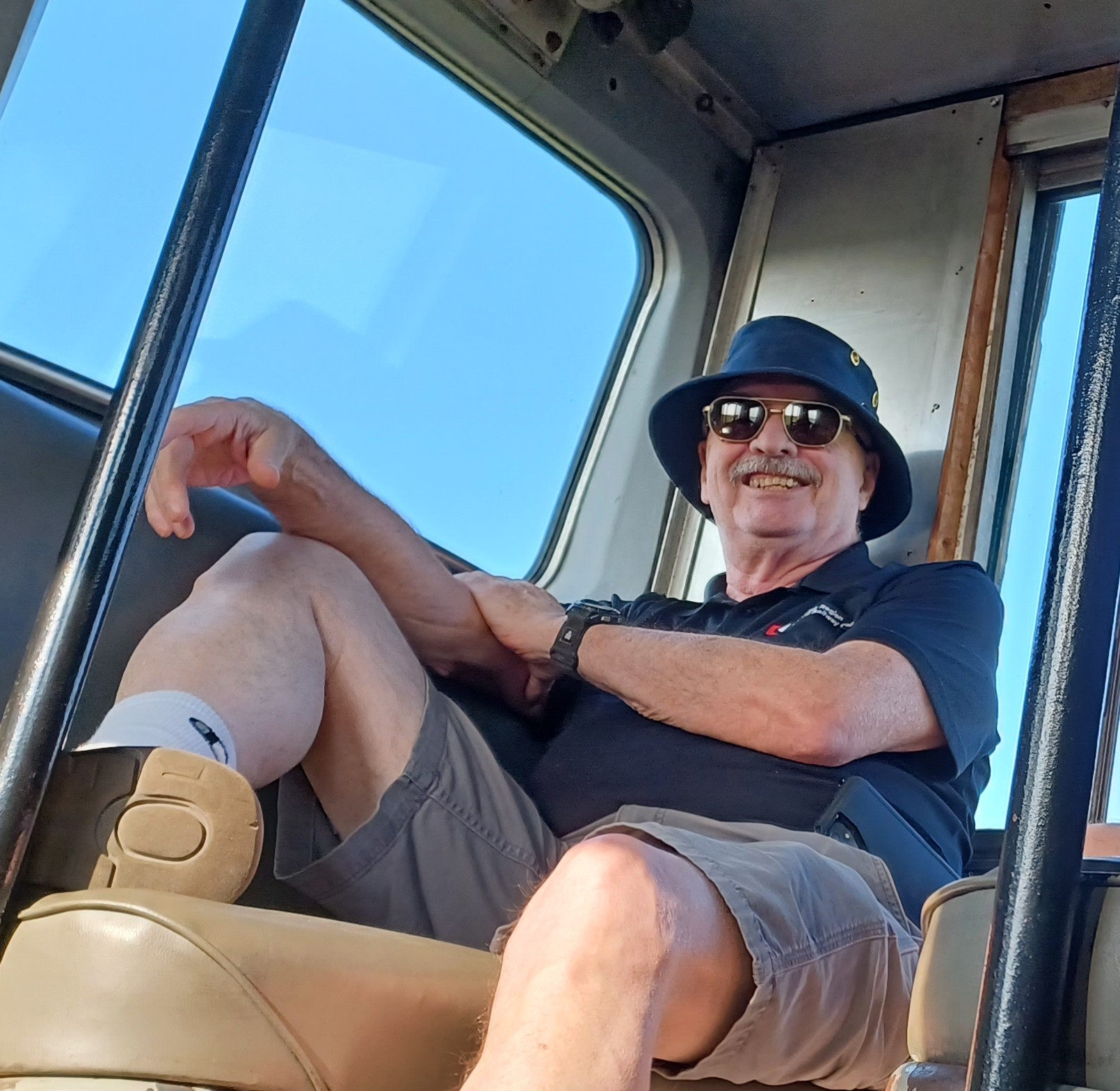
Skid aboard a caboose on the Waterloo Central Railway

Before moving in retirement to Waterloo, Jim was a longtime Sudbury resident and a former accountant with INCO, and he applied the same commitment and accuracy to our club as he gave on the job. A self-described ‘numbers nerd’, Skid was drawn to operations on our Sudbury Division layout, and studied the real-life CP Rail freight procedures manuals to apply them in miniature form. From this Jim helped to set up paperwork and stage trains before WRMRC operating sessions, and successfully learned the Sudbury Yardmaster position (no small feat).

Jim was also a lifelong motorcycle enthusiast, and loved to share his adventures on the road which, when coupled to his zest for life, gave us stories that both entertained and lifted us all. But above all, Skid was a genuine people person—quick with a word of encouragement, endlessly patient, and always ready to lend a hand. He welcomed every member, or potential members at train shows, and made our club feel more like a family. We will miss his dedication, his generous spirit, and the spark in his eye when he spoke about his many experiences and tall tales.

We wish to extend our sympathy and commiseration to his family, and his many close friends. We honour Skid’s memory by supporting one another, and by keeping his stories and adventures alive.

2025 Fall Open House

All Aboard for the WRMRC 2025 Fall Open House!

Join us on Saturday, October 18th, and step into a miniature world of wonder and craftsmanship as we showcase our CP Sudbury Division layout to the public.

Our open house offers a unique blend of nostalgia, artistry, and technical wonder — perfect for all ages. This is your chance to see the magic behind the scenes, learn some new techniques, or maybe spark a new passion.

Overall view of Romford with “The Canadian” meeting the North Bay Turn. Freight from Toronto seen behind rock cut on Parry Sound Sub.

Whether you’re a seasoned modeller, a novice looking to find inspiration, or just hoping to enjoy a captivating day out with the family, our open house promises an enjoyable journey through the miniature world of prototype railway modelling.

For people attending the Real Rails convention in Burlington, we’ll also open the layout on the Sunday afternoon *for convention attendees.* So you don’t want to miss that if you came in from out of town for the convention.

Hope to see you there!

2025 Doubleheaders Layout Tour – Saturday March 29th, 2025

It’s that time of year again!

On Saturday, 29 March 2025, our CP Sudbury Division will be open to the public in participation with the annual Kitchener-Waterloo-Cambridge-Guelph and area layout tour, organized by the Doubleheaders Model Railway Club. This is a self-guided tour of a large number of club and private home layouts in the area.

If you are new to the Doubleheaders tour there are approximately 25 different layouts you can visit, varying from large club setups to small N-scale pikes, and you can see everything from tinplate trains to scratch-built prototype models. However the layouts are spread over a large area, which makes it difficult to see them all in a day. So you should prepare for a full day of layout touring, and also maybe consider making this an annual, or at least semi-annual event to frequent over the years.

For more details and ticket information please visit the Doubleheaders Model Railway Club web site.

Please note: Though some layouts on the tour are open later, the WRMRC will only be open from 9 am to 5 pm.

Hope to see you then!

Out With the Old, In With the New

Though our layout is essentially shut down each year over the summer months (from mid-May to the end of August), it is hardly a quiet time for the CP Sudbury Division. The summer season is when layout expansion work, heavy construction and miscellaneous major projects can occur without the interruption of club operating sessions or open houses to get in the way.  

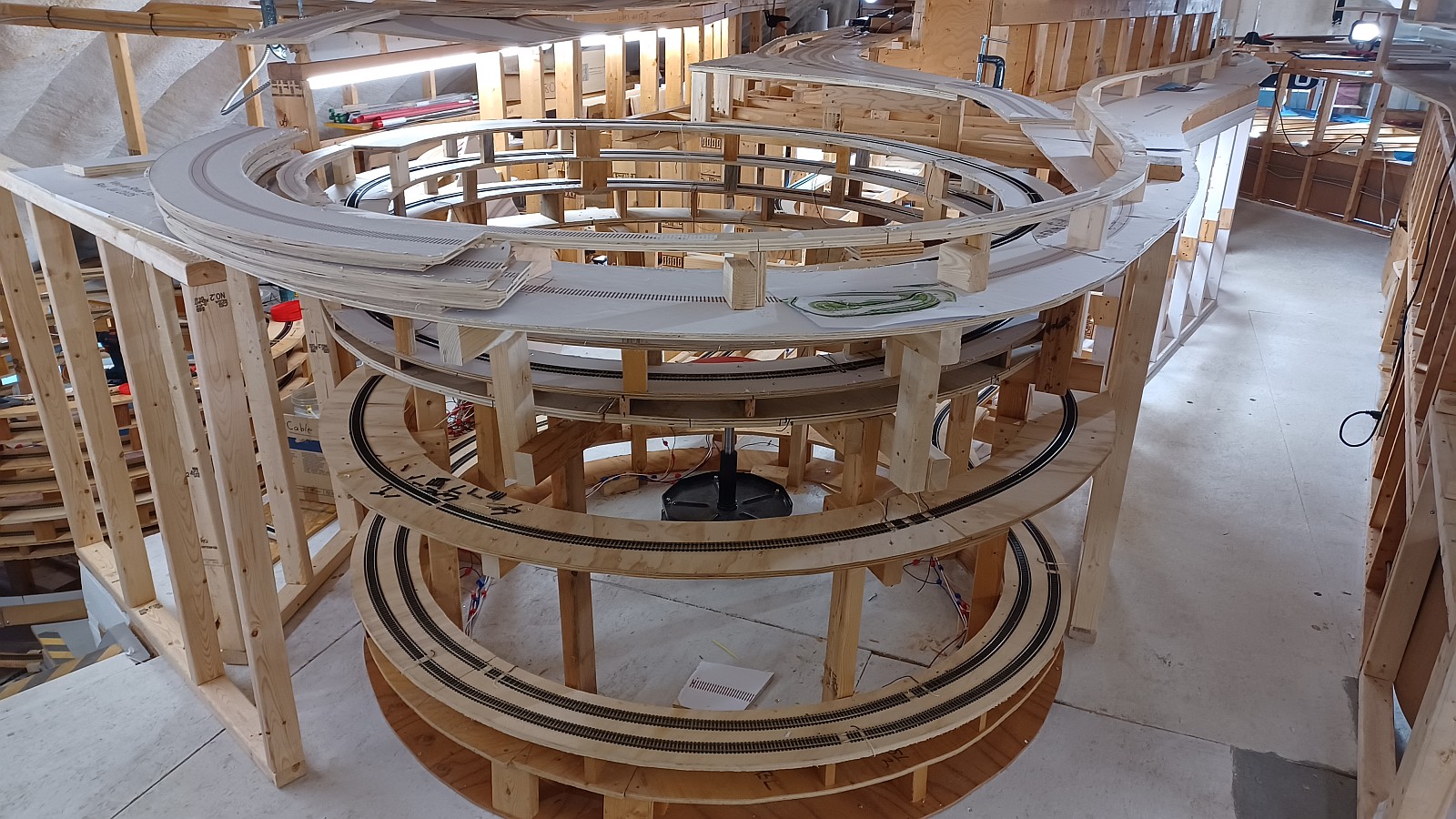
The summer of 2024 was particularly busy with a number of major projects including; a complete change-out of the turnout ground throws for Tortoise switch machines within our Copper Cliff / Creosote industrial area, CTC signaling and logic programming at Stinson siding, fluorescent to LED valence lighting replacement over many aisles, and the construction of a maintenance platform within our ‘sky helix’ that spirals between floors connecting Sprecher and Larchwood.

The ‘sky helix’ spiralling between floors connecting Sprecher and Larchwood. Preparations to finish the mainline required a maintenance platform be built to climb into this helix from the main floor.

Possibly the most exciting project of the summer was a complete clean-out of all the stuff we’ve stored for many, many years now on the top floor. Well, the actual cleaning part sucked as it was tough and took what seemed forever, but it was done to clear the way for our Cartier Sub mainline to finally be completed. As August ended, we had already begun the benchwork for Sturgeon Falls, and planning for the huge 14-track staging yard (representing the entire CPR west of Cartier ON) that will be built above it. That is the exciting part.

Autumn and colder weather also marks the beginning of another operating season for the CP Sudbury Division layout, with five op sessions and two dates where we’re open for the public. A number of operational projects also occurred prior to the operating season beginning, mainly involving the addition and preparation of new equipment (weathering rolling stock, DCC programming of locomotives, etc.) along with any modifications or updates required by our car-forwarding/waybill system.

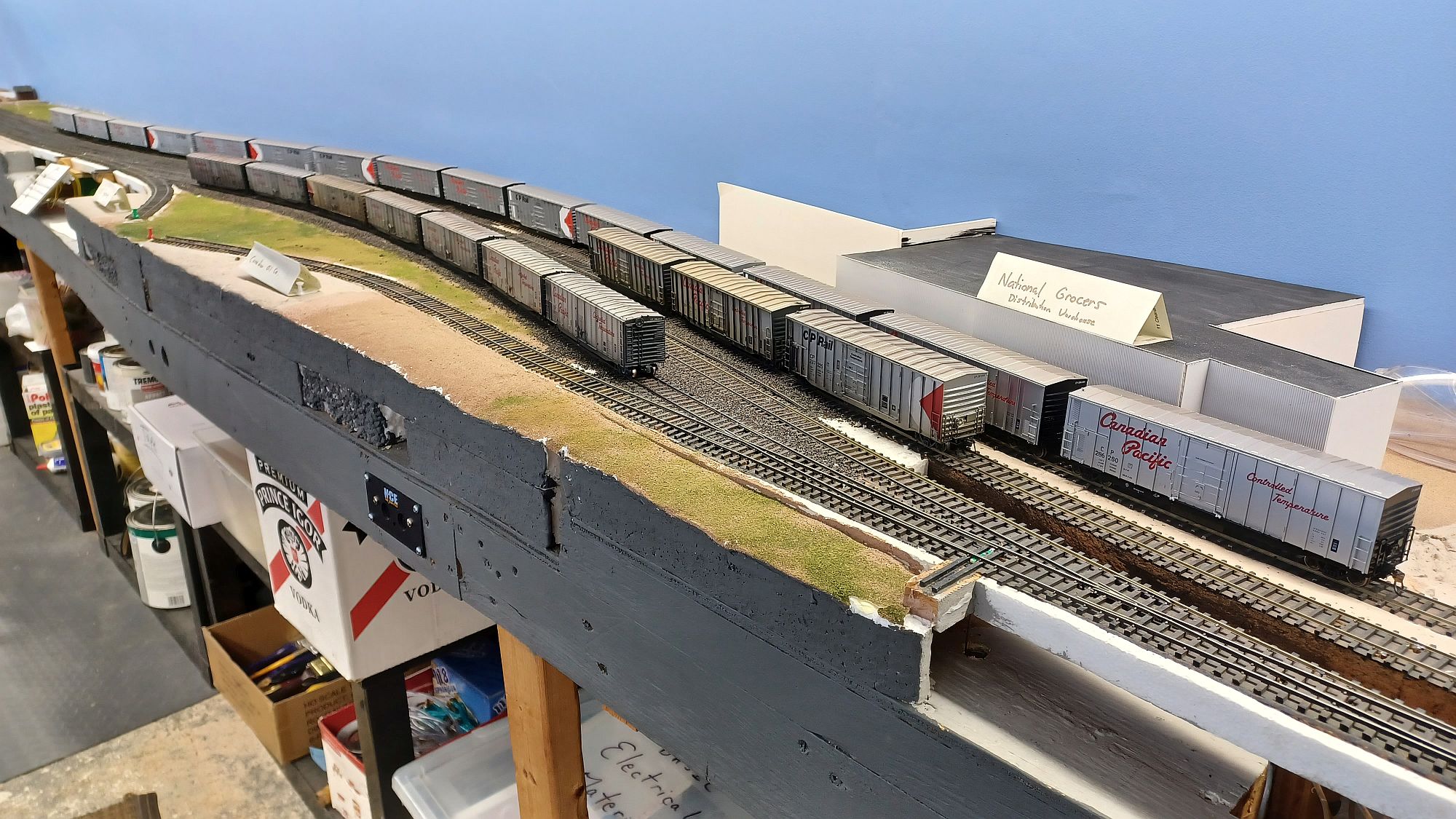
Two strings of our new Rapido NSC reefers form a backdrop behind recently retired stand-ins. The three reefers in the middle are the first Rapido models we weathered. Though they served faithfully for nearly two decades, these old stand-in ‘foobies’ were never accurate models.

In addition to the usual operational projects, this summer also saw us replace an entire fleet of cars, and even a piece of office furniture. Replacements of car fleets are not common, as the vast majority of our rolling stock are high-quality models which fairly accurately represent their prototypes. But some of our freight cars are ‘placeholders’ so to speak. These are cars too important or iconic to not have within our operations, and so we utilize inaccurate models or ‘foobies’ (to use modeller’s jargon) that appear close enough. If or when accurate replacements become available then these foobie fleets get replaced, and we have blogged about this topic in the past.

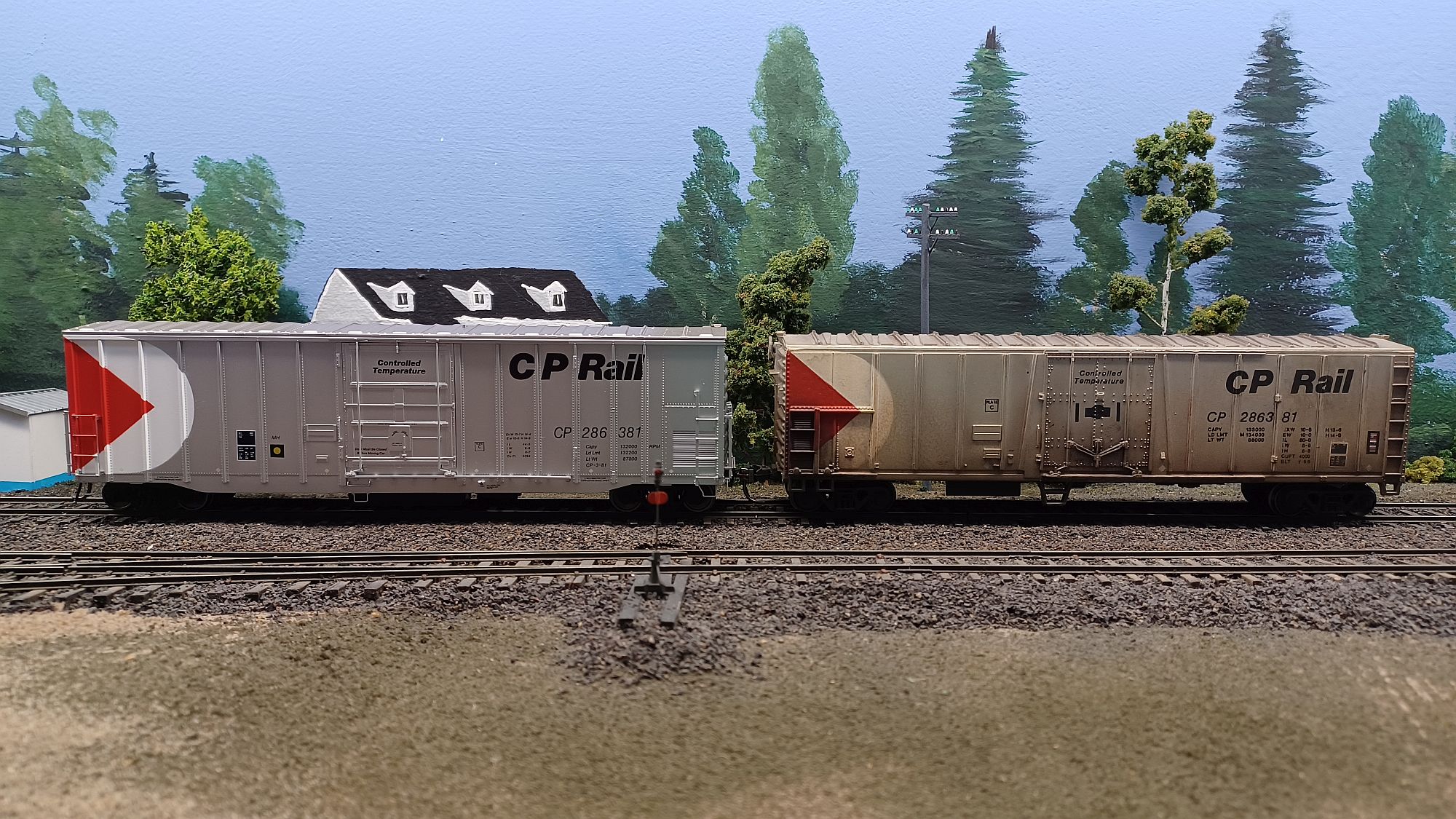
Duelling CP 286381’s. Only a minority of CP’s 400+ fleet of 50ft mechanical reefers were ever repainted into the CP Rail scheme, so it shouldn’t be surprising that a road number Rapido selected would conflict one of our old cars. Rapido’s accurate model (left) versus an old Athearn ‘blue-box’ repainted version (right).

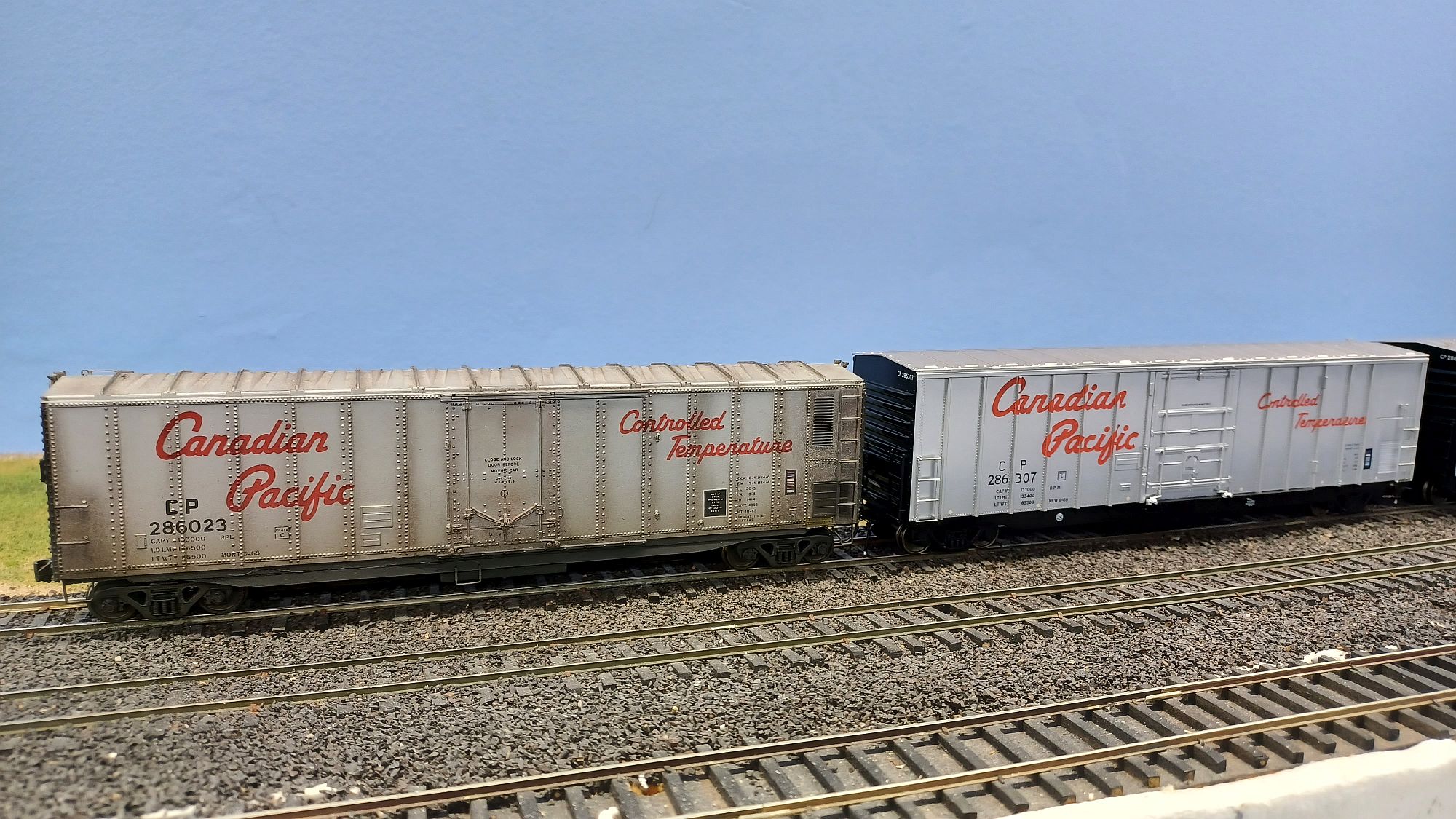
The mass replacement which occurred this past summer was our CP mechanical refrigerated boxcar fleet. These reefers were staples on CP’s hot transcon freights through the 1970s, with large blocks appearing right on the head-end of freights like #952. Our operations wouldn’t be right without them. So with the exception of a single 40ft kitbashed model of a CP 285600-series car, our entire fleet of mechanical reefers were stand-ins consisting of Athearn ‘blue-box’ models, and some Accurail outside-braced 50’ boxcar bashes. These were all retired thanks to a club bulk purchase of brand new Rapido NSC-built CP reefers.

Side-by-side comparison of an old Athearn ‘blue-box’ reefer (left) with a new Rapido NSC model (right). Though the Athearn cars represented another prototype (the Hawker-Siddeley smooth-sided reefer) they were all retired thanks to the Rapido car being a 100% correct model of an NSC-built outside-braced reefer.

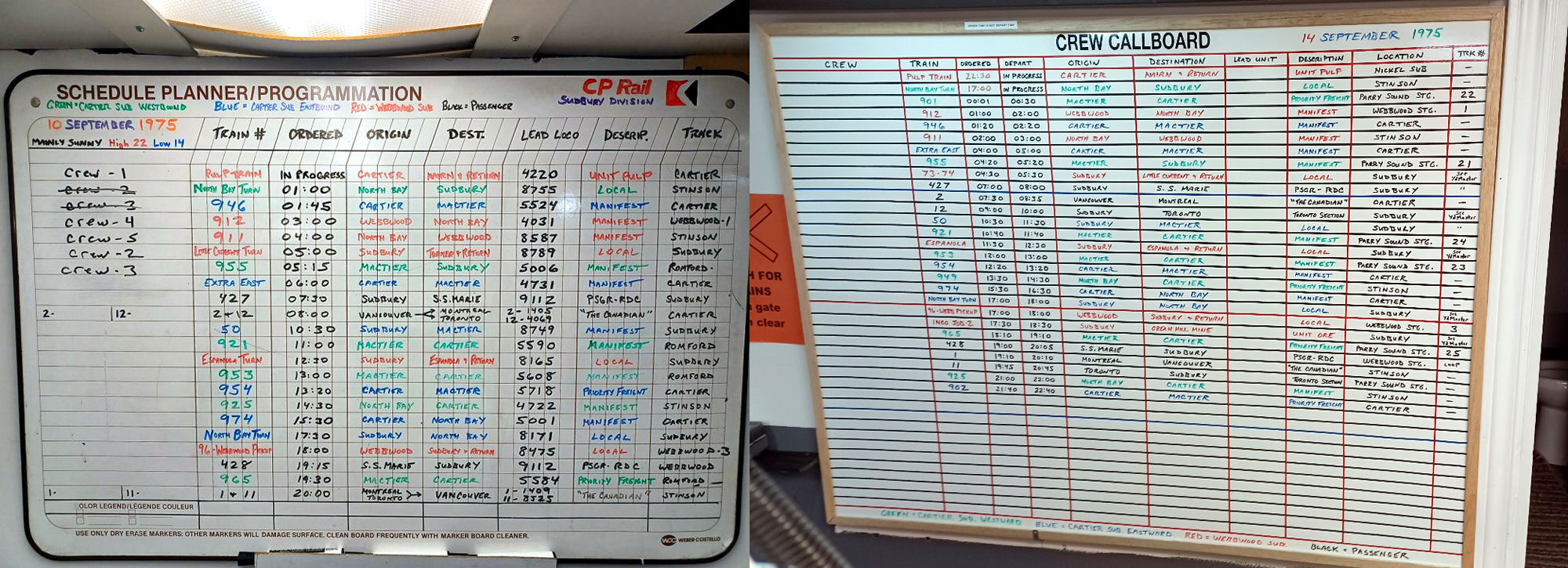
Replacing office fixtures is even more uncommon than rolling stock retirements, since there are so few that we utilize in club operations. In fact, we believe this to be the first instance. Our venerable and iconic Crew Call Board, a grid-marked whiteboard employed since our first operating sessions began well over 20 years ago, had to be replaced.

As the layout expanded and new freights continued to be added to our operations over the decades, we’d been stretching the old board past its original capacities. Three additional rows were squeezed in over time. We even saved room by listing both the Montreal and Toronto sections of “The Canadian” within one line. However, we broke the board after our first nickel ore train was inaugurated (INCO Job 2), and had no room left when the time came to add hotshot transcon freights 901/902 to our operating scheme.

Comparison of our old Crew Callboard (as photographed in 2021) with the new replacement board ready to go for our 14 September 2024 op session. After adding transcon freight 949 and INCO Job 2 to club operations a few months ago, we ran out of room for trains 901/902.

With our resent summer work beginning the push to finish our Cartier Sub mainline from North Bay to Cartier staging, it wasn’t hard to think of building towards the future. So, we acquired a very large whiteboard and grid-marked it with 40 rows. All those rows will allow us to list every mainline freight and local that was ever run on a daily basis over the CP Sudbury Division, with accommodation for a few extras and second sections too. Our only worry now is will we have enough operators to run them all? Thinking back to our lean beginnings during the WRMRC’s fledgling years, that is actually a remarkable thing to have to worry about.

State of the Layout – March 2024

It has been a while since our last blog post, so we thought a quick status update may be in order to show some of the exciting projects we’ve been working on over the winter. Also with the 2024 Doubleheaders Tour date quickly approaching, this will serve to advertise some of the new things you can expect to see if you make the trip to Maryhill.

Victoria Mine Spur (INCO – Crean Hill)

Located approximately 45km west of Sudbury, this area is situated on the southern-most end of the Sudbury Igneous Complex. The original Victoria Mine was opened in 1906 after a vein of copper-nickel ore was discovered here near the newly completed CPR line to Sault Ste Marie (the present day Webbwood Sub). A town of over 1000 residents sprang up here quickly, and thrived until the mine closed in 1930. Though Victoria Mine became a ghost town, the CPR maintained a siding here and the name lived on in employee timetables.

But as is usually the case in the Sudbury Basin, after one digging pays out another mine will usually spring up years later. And sure enough just three and a half miles away from Victoria Mine, another ore discovery was made which caused INCO to open a new mine in 1965 called Crean Hill. This caused the CPR to construct a whole new spur to service the facility, and to erect a train order station at Victoria Mine where the spur joined with the Webbwood Sub.
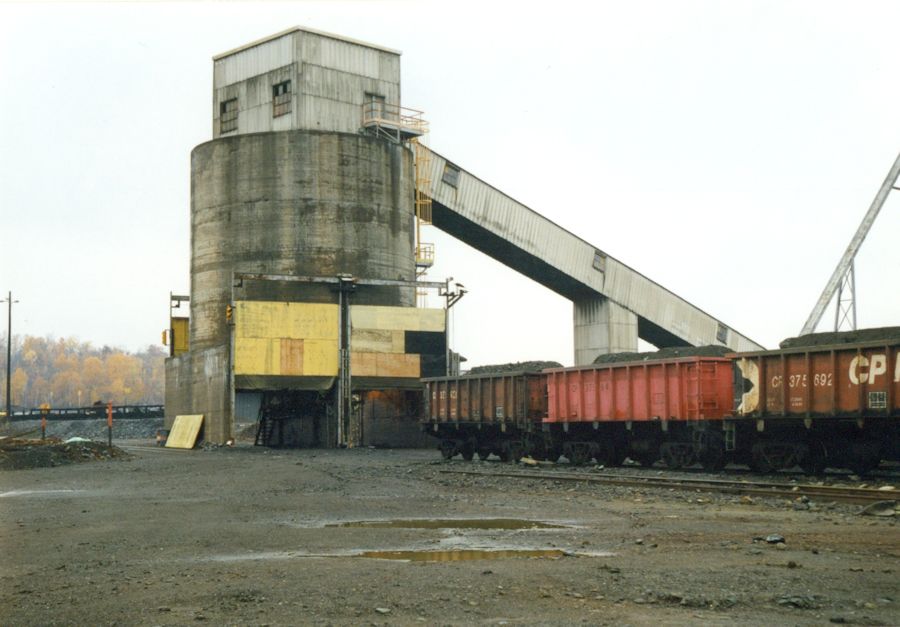
Crean Hill Mine

INCO’s Crean Hill Mine rock loader facility, as it appeared in 1991.

Our club actually built the spur down from Victoria Mine very early in layout development, as the helix that carried the Webbwood Sub between Copper Cliff and Nairn had to be built immediately, and the Victoria Mine spur ran along within the same helix. The Crean Hill mine trackage was laid early too, sometime around 2002 as best we can tell. Some rudimentary scenery sprang up, and construction of a rock loader had even begun. However the whole project sat for decades until we could re-create a large enough fleet of ore gondolas. That was the stumbling block as these ore gondolas were only used in one place on earth, Sudbury, with Canadian Pacific and INCO being the only operators. We had managed to build a small fleet of 1970-built CP cars that were produced by Sylvan Scale Models (the only correct Sudbury gondola kit ever produced) but these are craftsman resin kits that require time to build en masse. They are also long out of production.
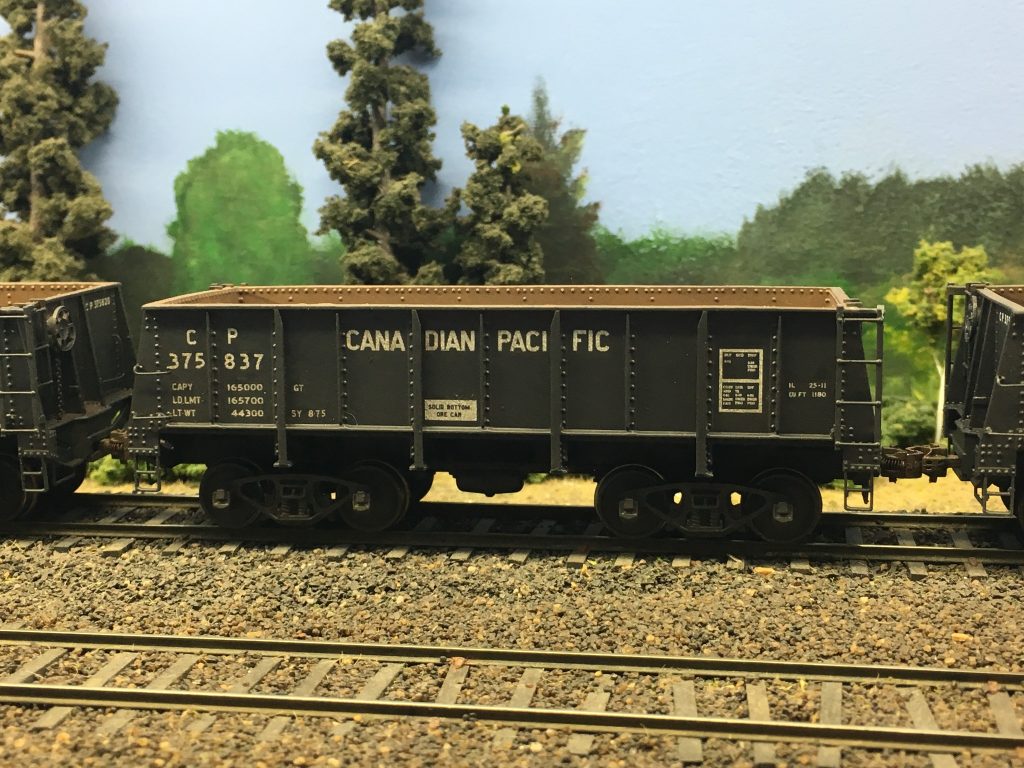
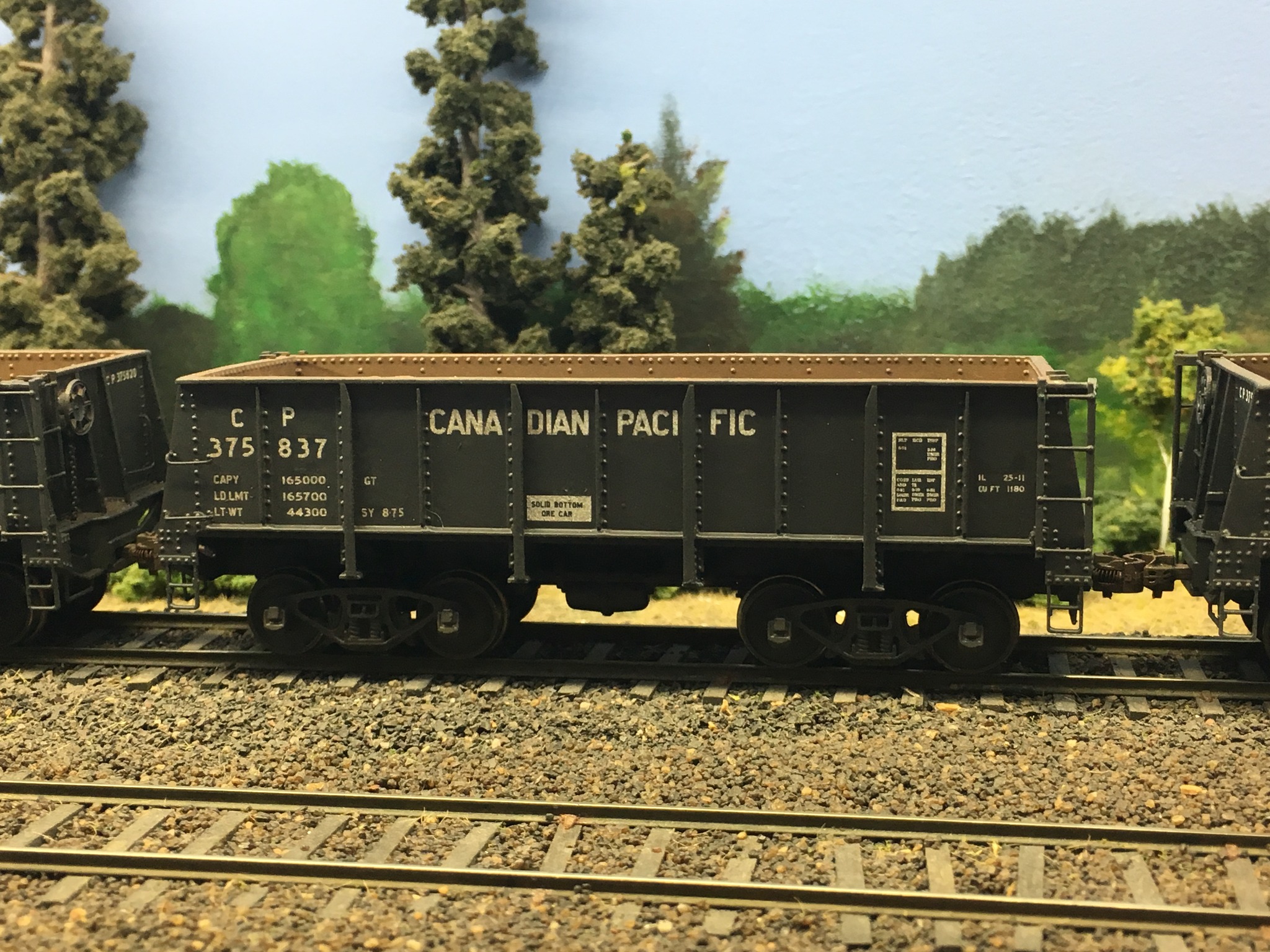
CP 375837

3D printed car from series CP 375800-375999, which was a conglomeration of cars originally built between 1926 and 1942 (ex CP 376350-376849) that were rebuilt with solid floors in the mid-1970s after INCO installed a rotary dumper at Clarabelle Mill.

But time and technology march on, and present-day modellers now have the benefit of the 3D-Printer. Through the purchase of a machine and many hours of research and CAD work, our own Chris V. has been going through the whole fleet of Sudbury ore gon types, and has been very busy printing, assembling, painting and decalling the large fleet we require.
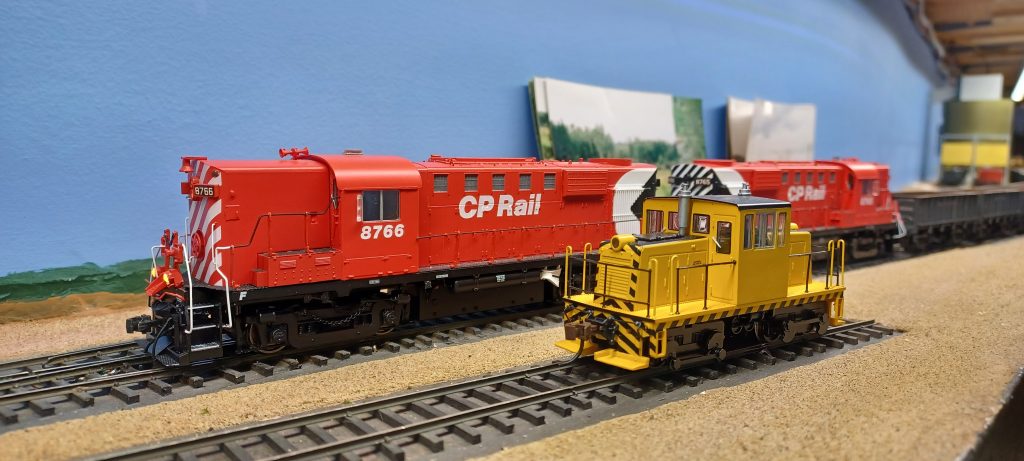
20240316_155616

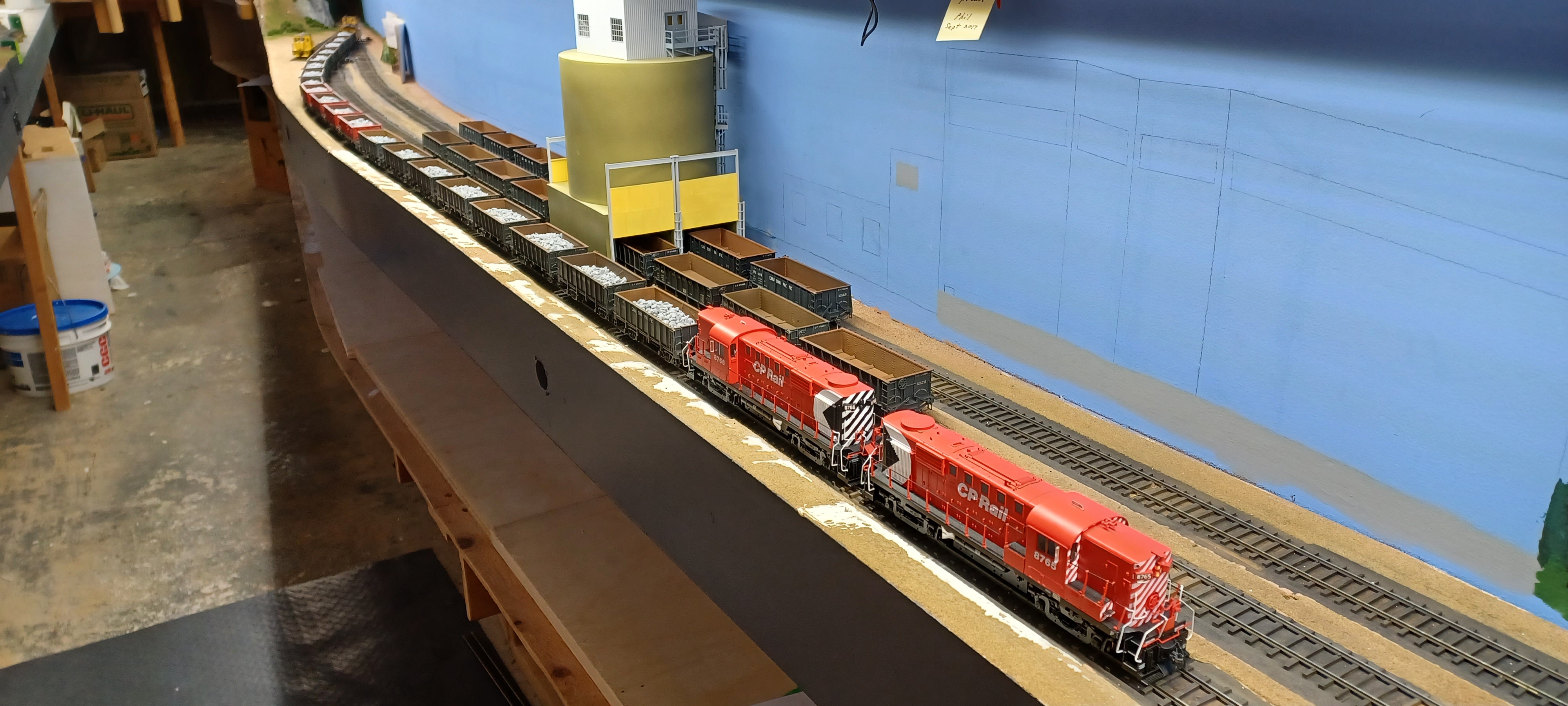
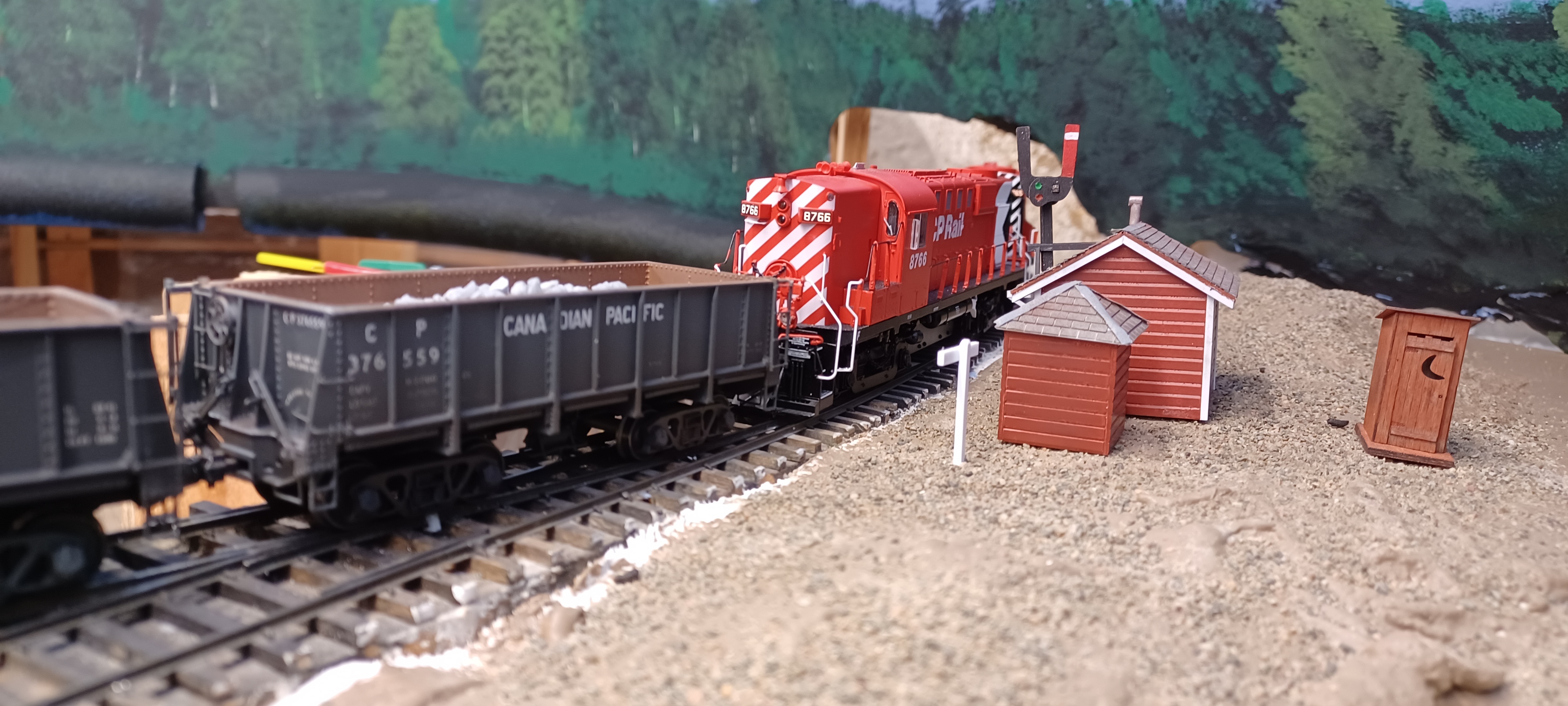
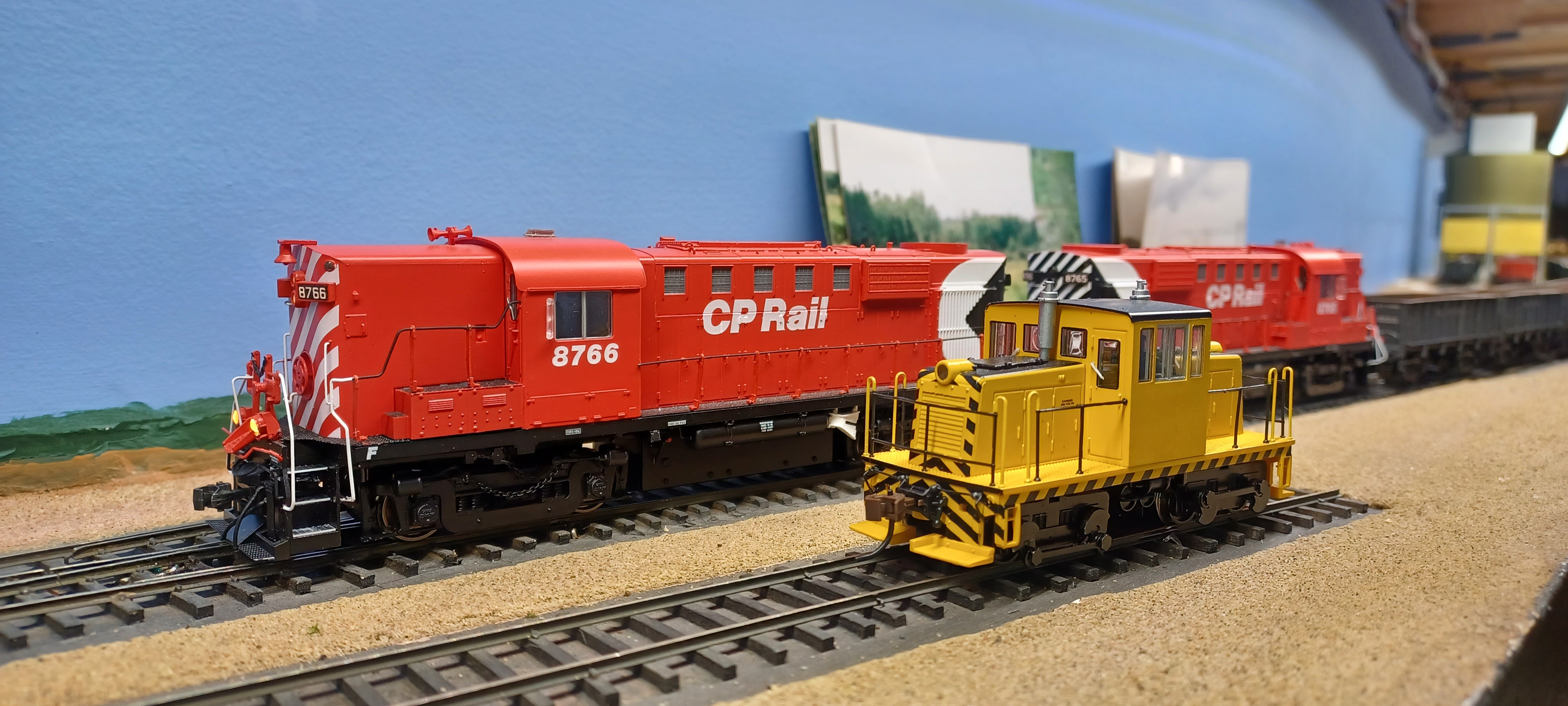
CP RS-18s 8766 and 8765 bring in the first train of empty ore gondolas to open the WRMRC’s miniature re-creation of the Crean Hill mine. The small GE 43-tonner is on loan from a member, and is substituting for INCO 65-tonner #201 that was once assigned here.

With around 50 ore gondolas now in service on the Sudbury Division, we installed all the remaining track feeders, a Tortoise switch machine on the junction switch at Victoria Mine, and cleaned all the trackage that’s been mothballed for all these years. As the photos show, the first “INCO Job-2” Crean Hill ore train has operated over the spur, exchanging 20 empties for 20 loaded gons bound for INCO’s Clarabelle mill.
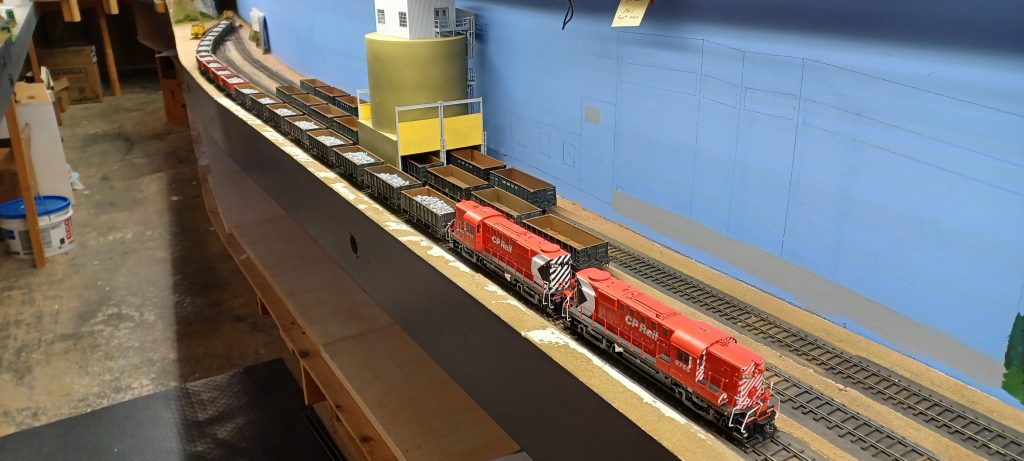
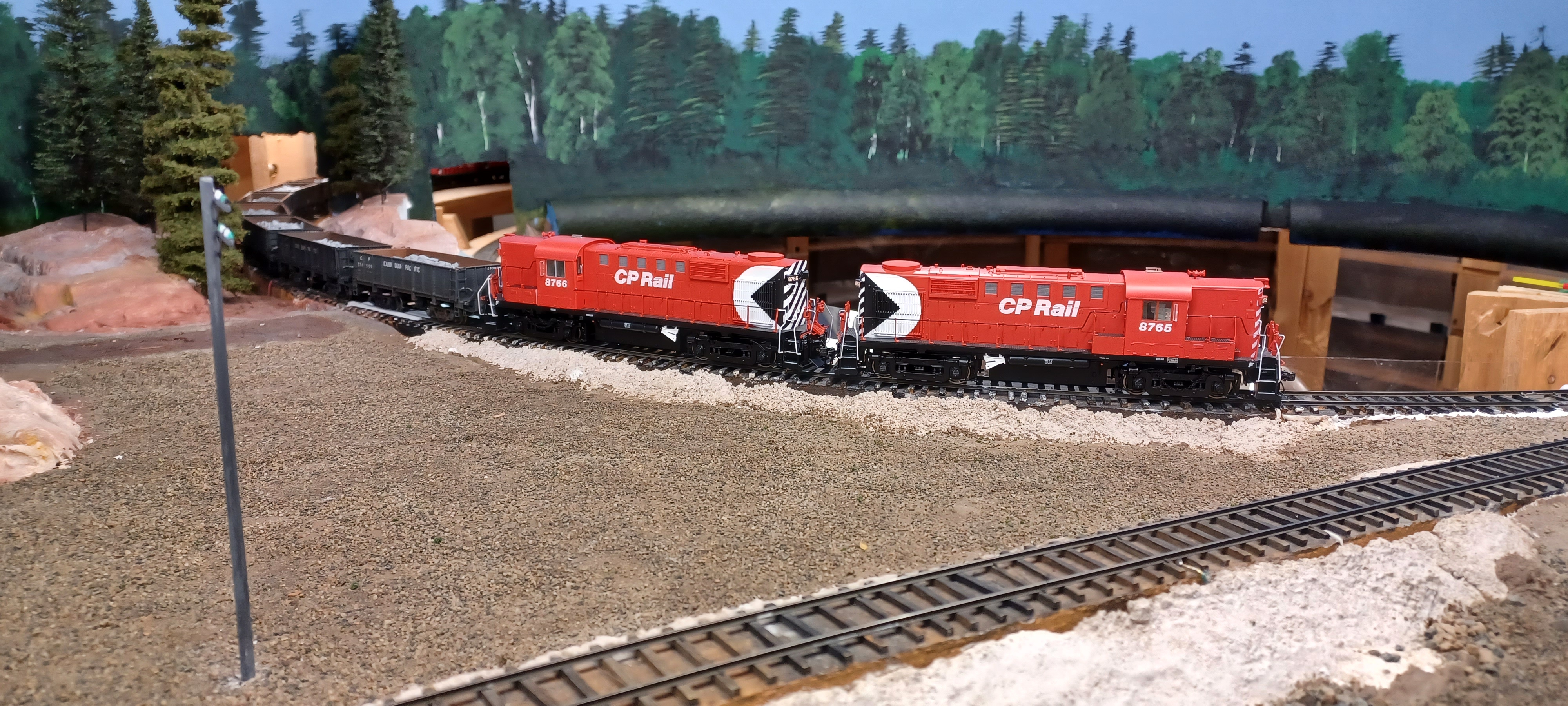
20240316_161318

The first loaded INCO-2 ore train is ready to leave Crean Hill mine. If you didn’t notice from the photos there is a real-life puzzle to switching the mine, because as the CPR Employee Timetables directly state; “Diesel units and equipment higher than ore cars must not enter rock house at Crean Hill.”

All these new 3D-printed ore gondolas, and the Crean Hill mine operation will be there for you to see if you take the 2024 Doubleheaders Tour on Saturday April the 6th. It will also gives you the chance to see how the crews running INCO-2 get around that rock house switching puzzle.

Victoria Mine Station

This project goes part and parcel with the Victoria Mine Spur entering service. With the ore trains soon becoming a reality, member Julius O. took on the task of scratch-building the diminutive Victoria Mine train order station and tool shed which stood guard over the junction switch.
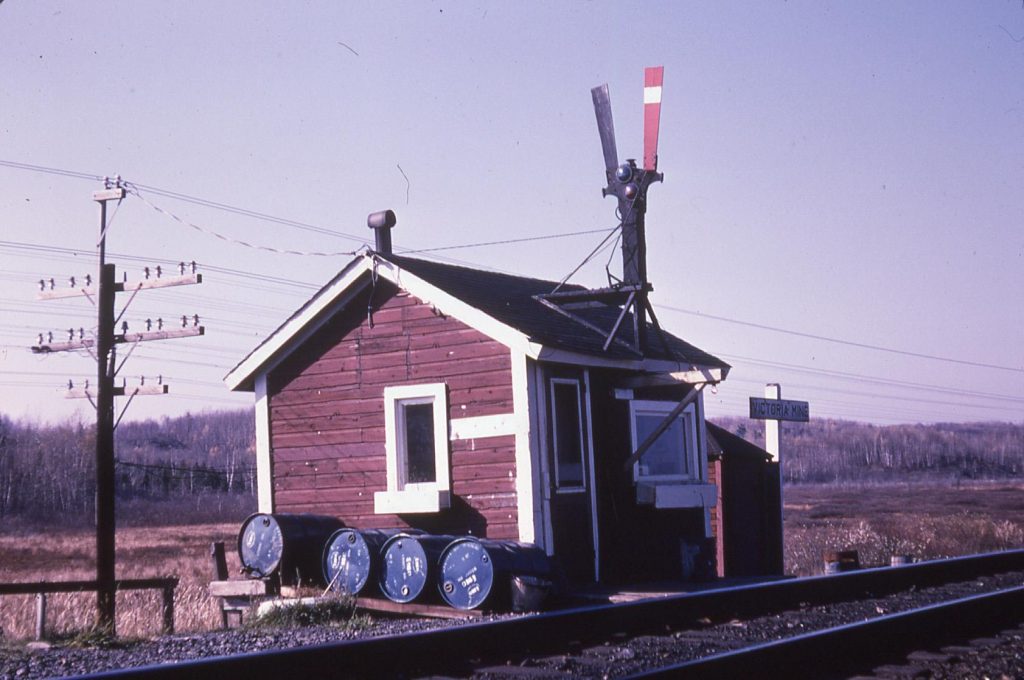
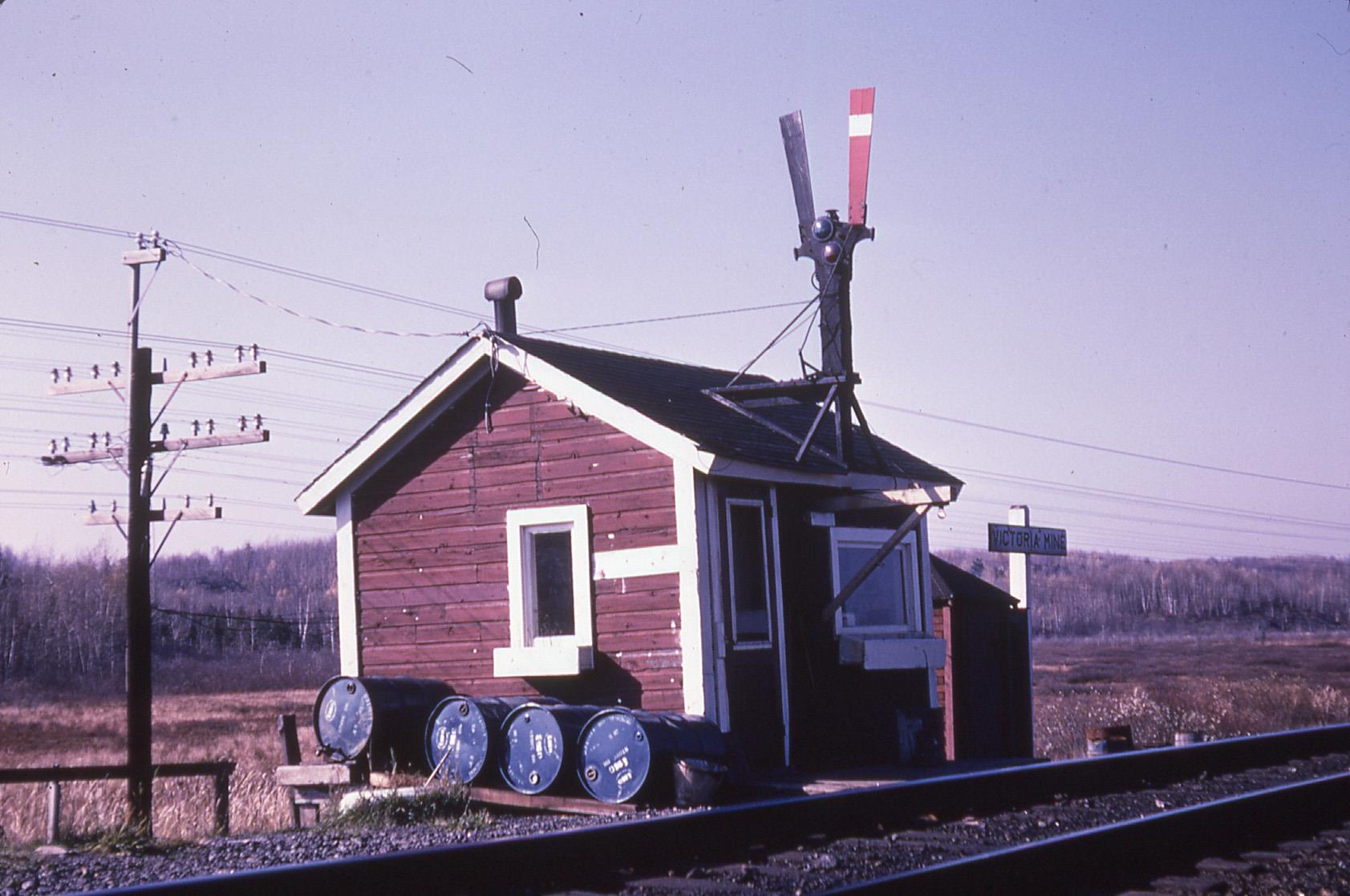
Victoria+Mine+1970

Victoria Mine train order station, tool shed, and station name sign, as they appeared in 1970.

Even though the structures are small and Julius is a seasoned structure builder, there were enough outstanding questions that he required consultations with the real-life experiences of fellow WRMRC member Robin A.. As it just so happens, Robin used to be a former CPR train order agent on the Sudbury Division in the early 1970s, and had worked at Victoria Mine many a time.
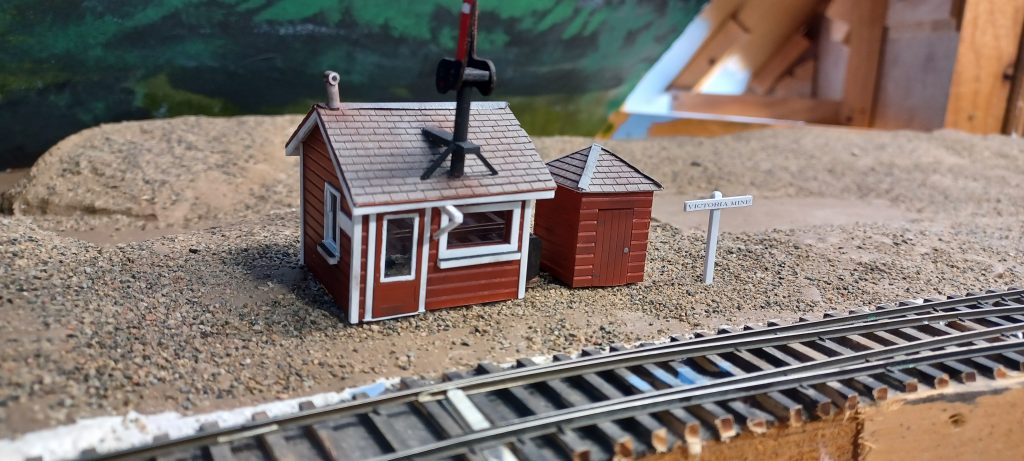
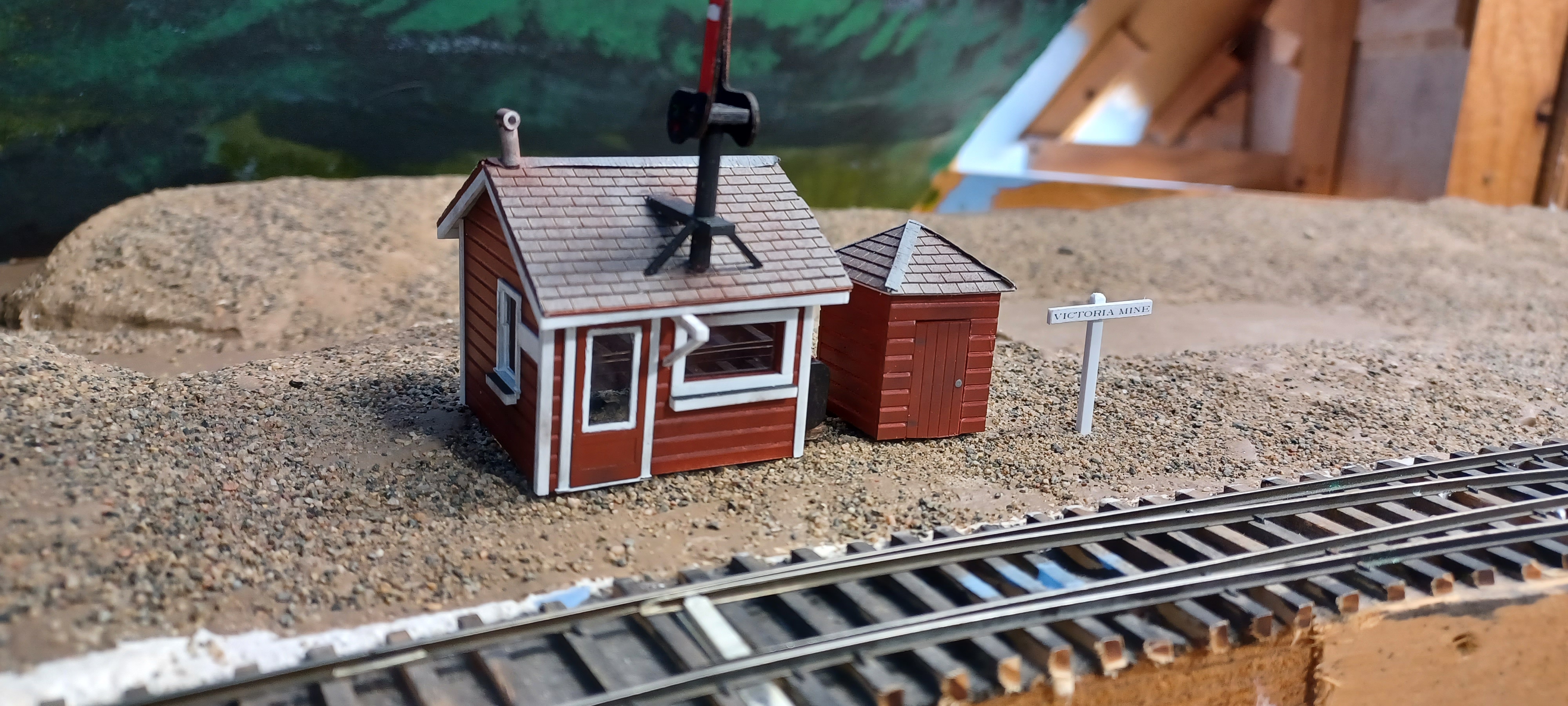
20240316_155807

Our 1:87 scale recreation of the Victoria Mine structures.

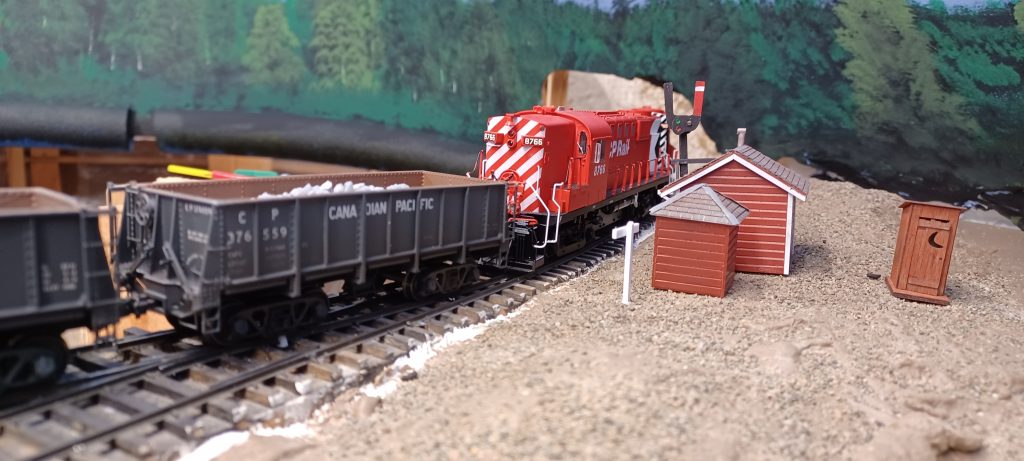
One of the more colourful anecdotes that Robin shared was of the bathroom situation at Victoria Mine, in that there was none. The station was remote and not manned 24 hours a day, so instead the CPR provided the agents with an outhouse should (more like when) the need arouse. The INCO-2 job was a night train, and so the walk to relieve yourself was dark, long, and one that could potentially cross paths with a black bear. So agents had to light a standard railway fusee to scare away any potential bruins that may have been near.
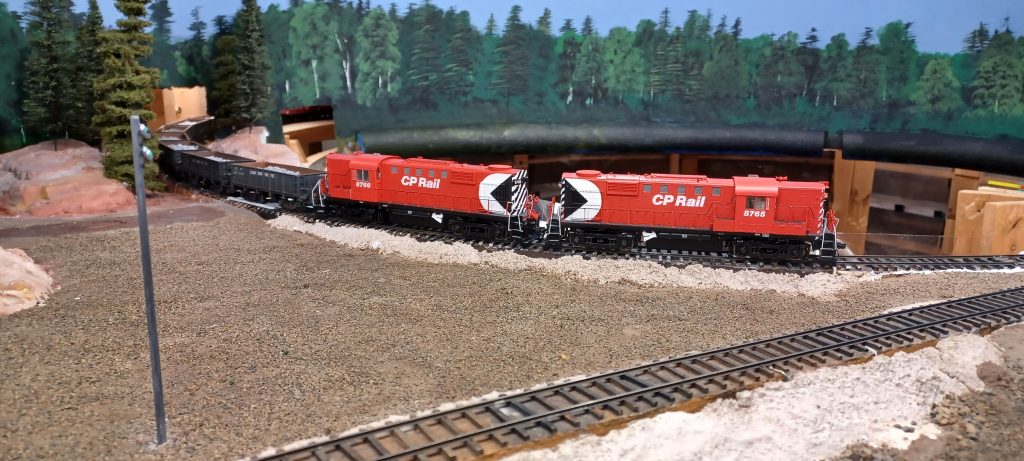
20240316_162003

The inaugural run of the first loaded INCO-2 Crean Hill job approaching Victoria Mine.

After the tour as we turn our attention to finishing off the scenery in Victoria Mine and hide this helix for good, Robin’s story has us thinking of 3D-printing a much younger 1:87 scale version of him running from the outhouse with a lighted fusee in his hand. Apparently reddish-coloured flickering mini-LEDs exist, so this silly idea may be a thing. Stay tuned.
20240316_162154

The INCO-2 crew stop at the Victoria Mine station to pick up orders from Agent Robin A. to return to Sudbury Yard. The infamous outhouse was moved closer to view in this photo.

Sudbury Station & Division HQ Building

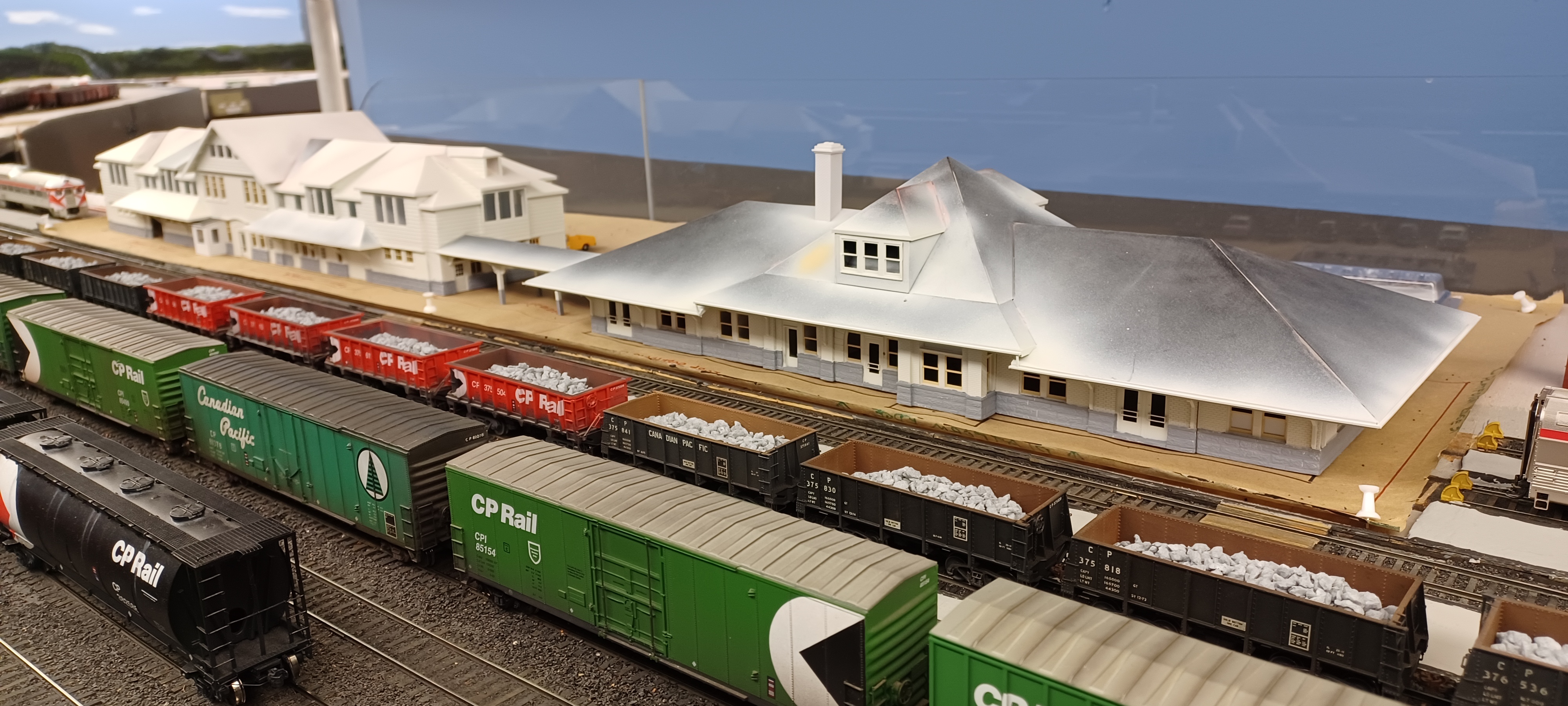
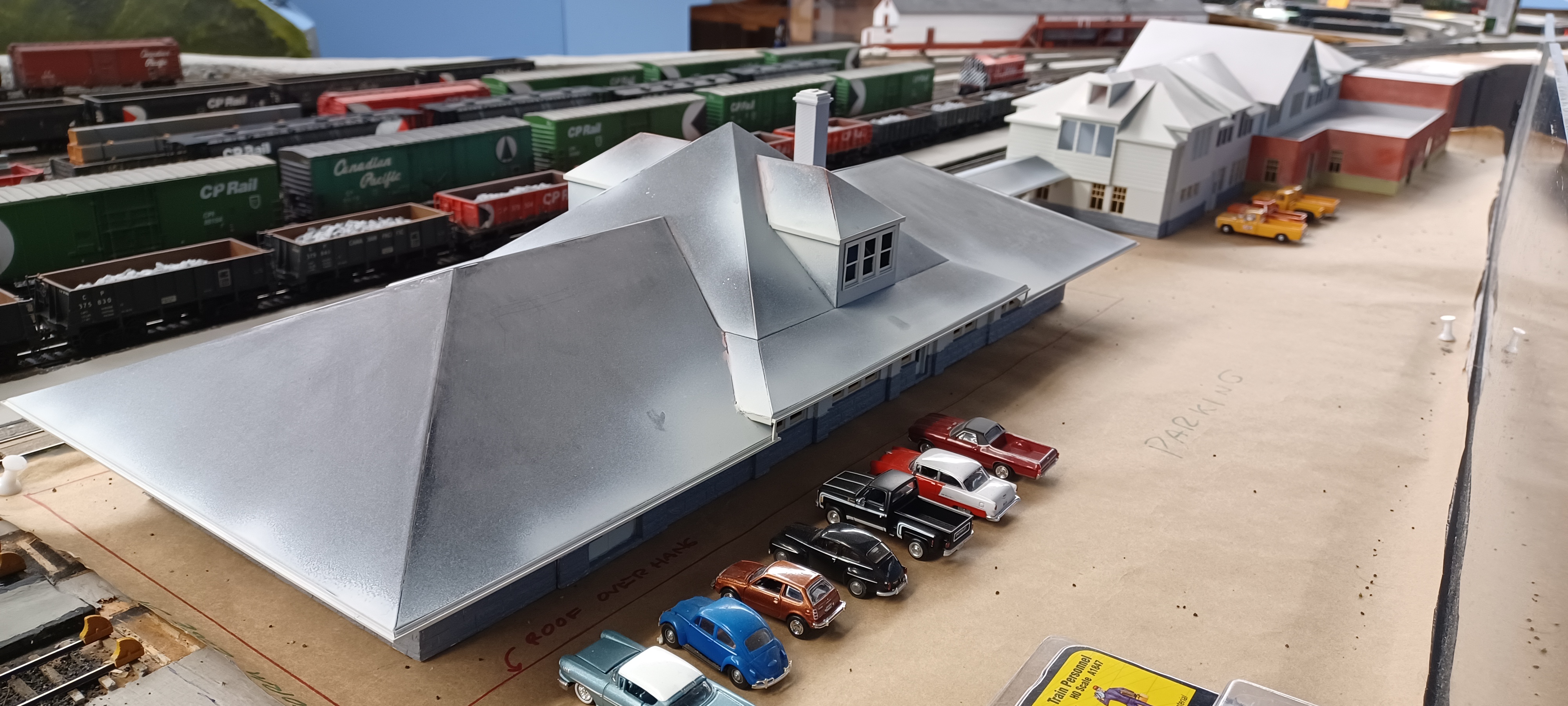
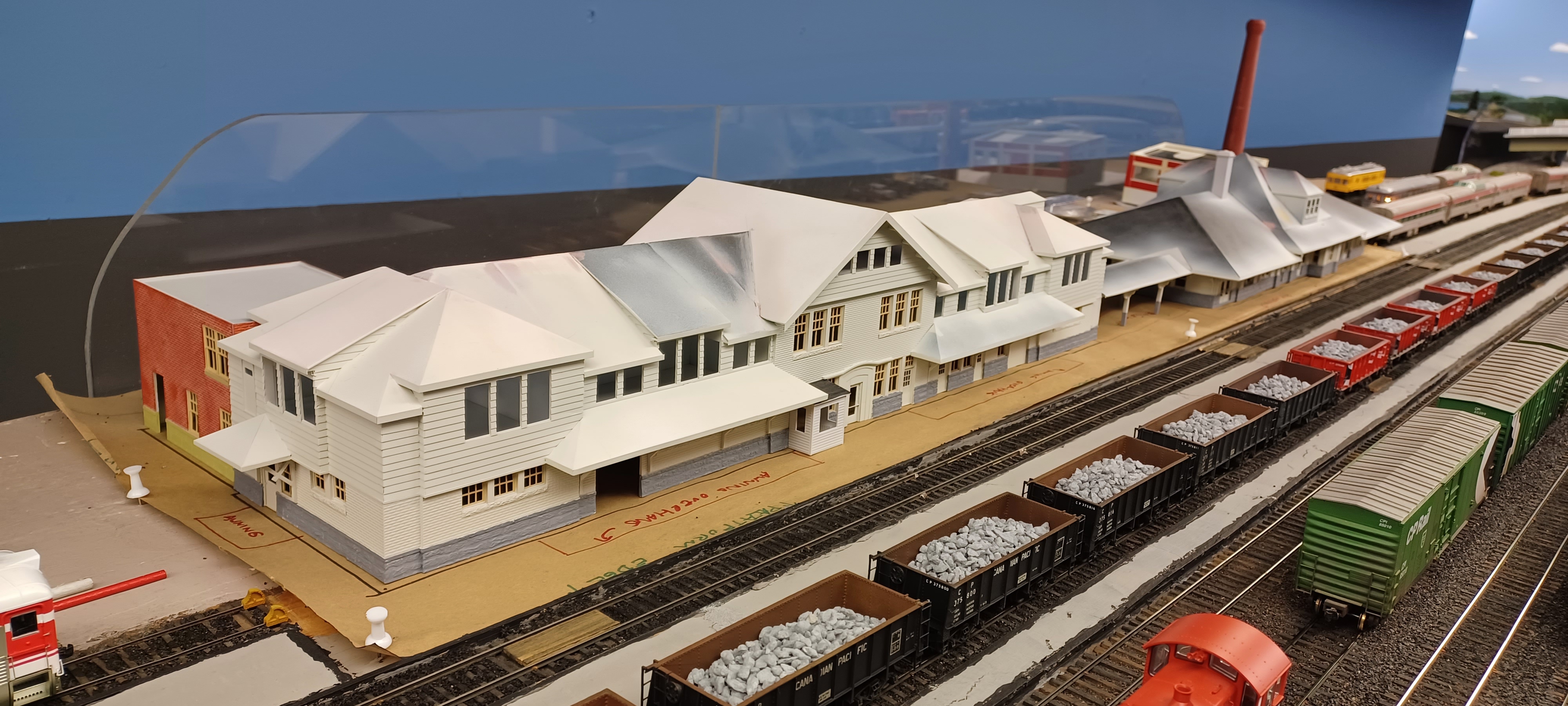
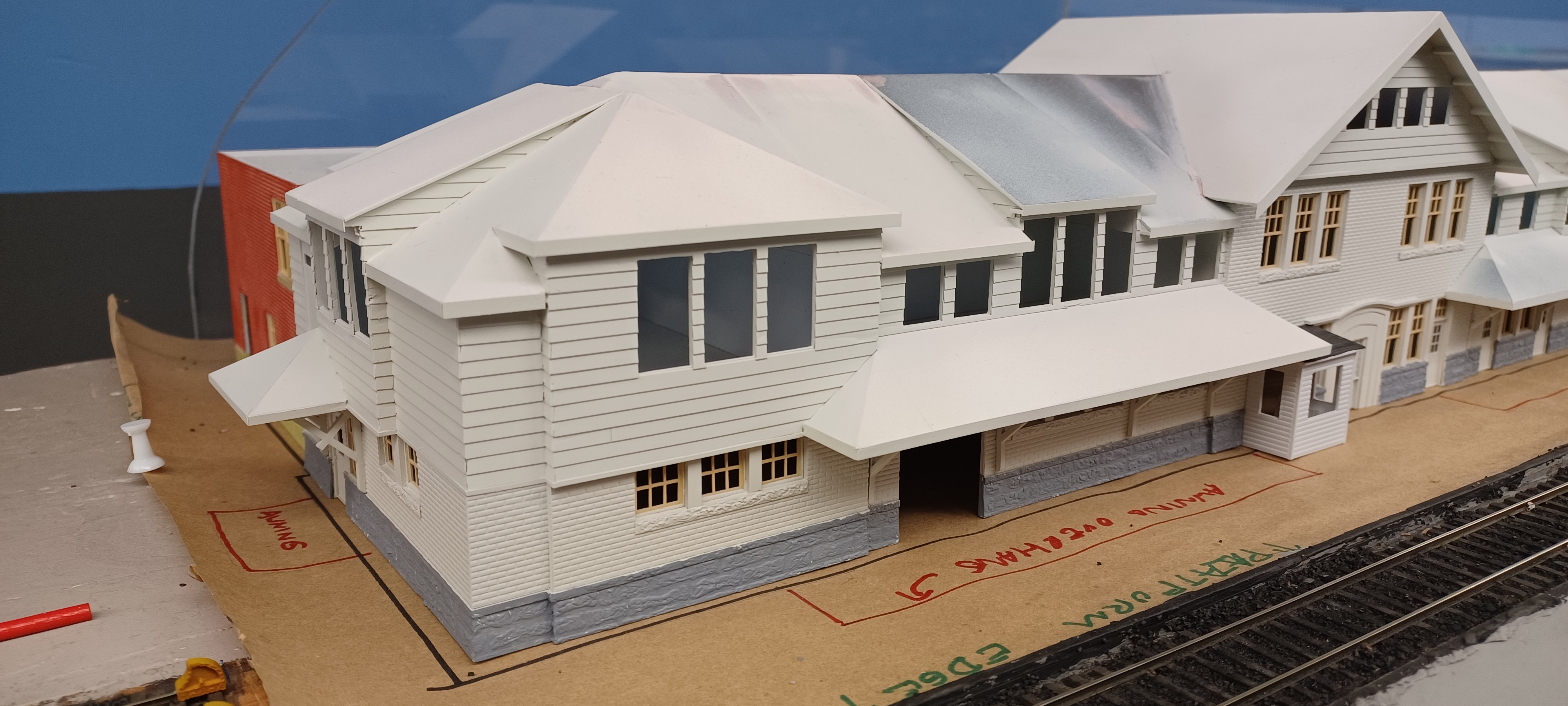
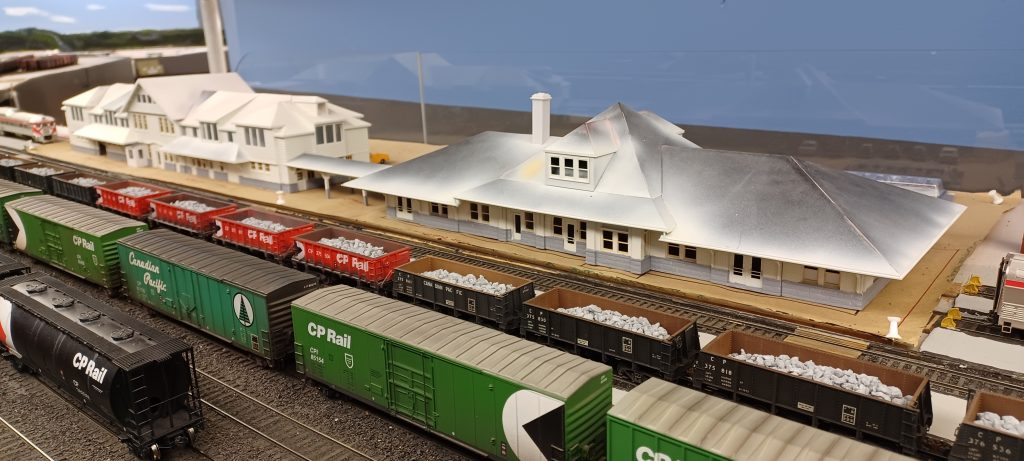
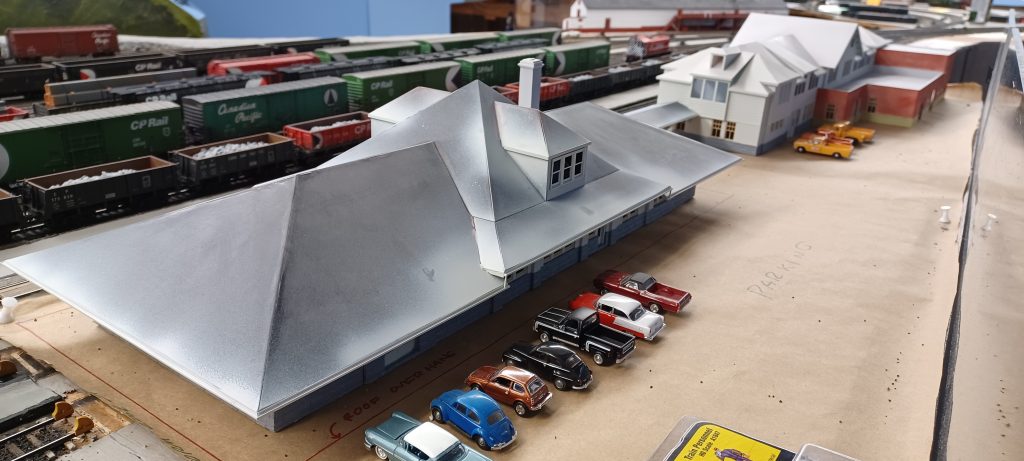
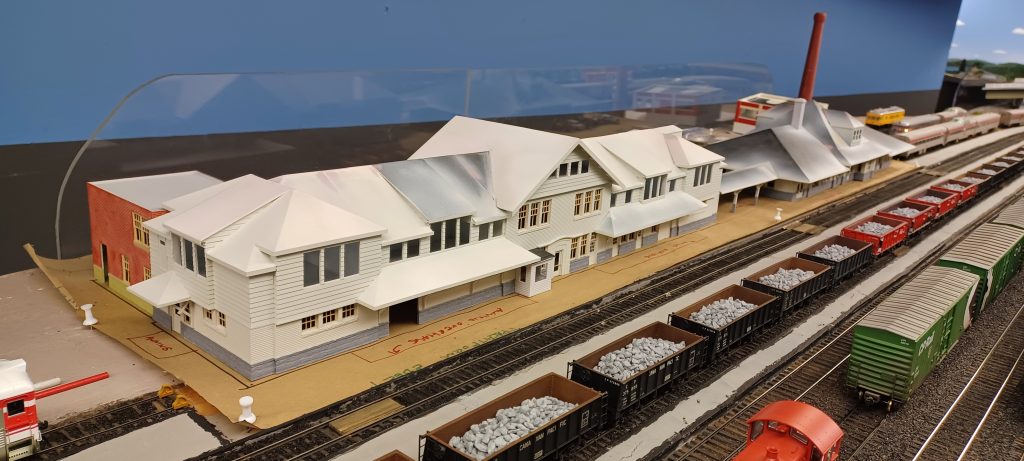
The CPR station and Sudbury Division headquarters building were off-site over the past year and had a lot more work done to them. Both are now nearing completion, and are back on the layout again for the public to view on the Doubleheaders Tour.
20240316_163527

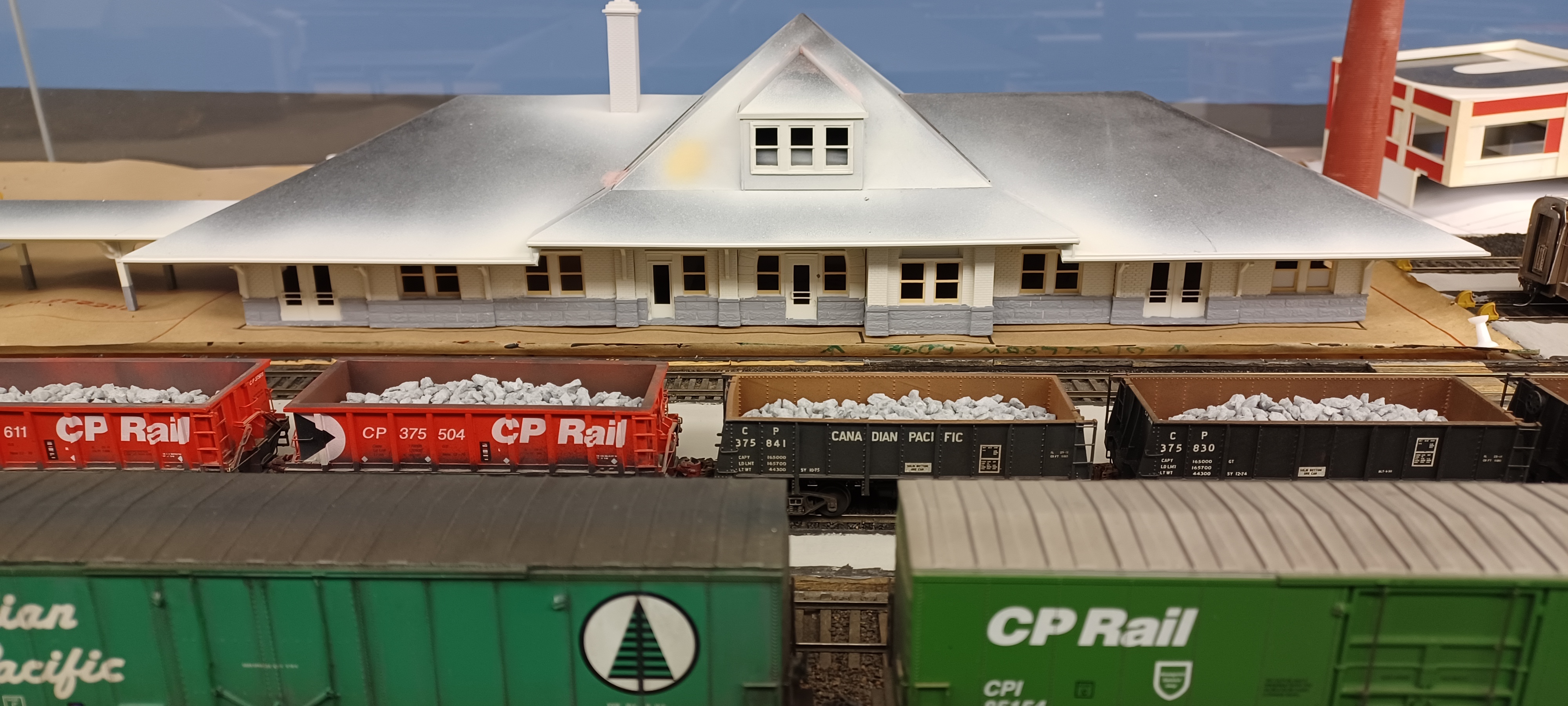
CPR train station and Sudbury Division Headquarters buildings on the WRMRC layout.

Aside from adding the roofing shingles, the station building is pretty much completed.
20240316_163419

Back view of the station building and division HQ.

The basic structure of the division headquarters and roof profile are now complete. The remaining windows and assorted details are still required.
20240316_163510

Still a work in progress, but the overall division HQ structure is now completed.
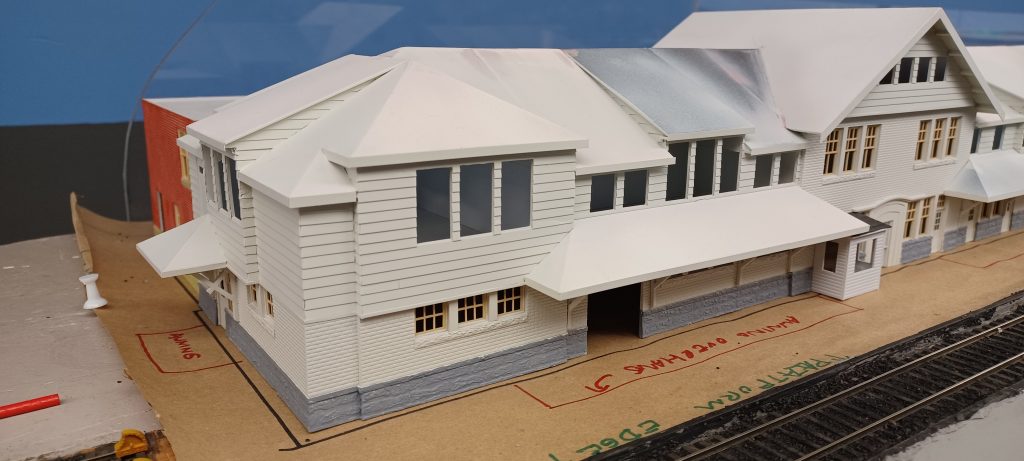
20240316_163722

The second floor on this corner of the division HQ building once housed the Sudbury Division’s dispatch offices.

Good as these photos may be, they don’t do justice to how truly impressive these structures are when you see them in person. If you can’t visit us on April 6th you’re missing out.
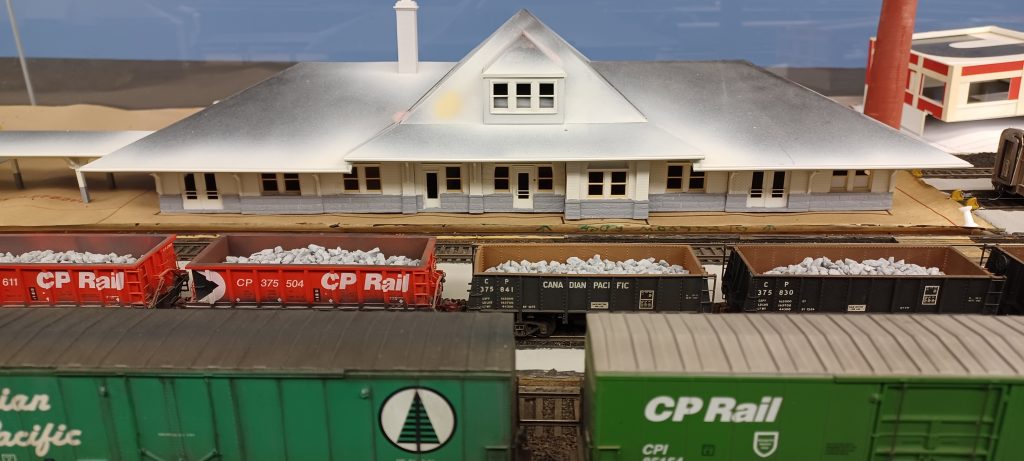
20240316_163826

The combination of the station building plus nickel ore gondolas leaves no doubt as to the only place this could be; Sudbury, Ontario.

Miscellaneous Items

In addition to everything highlighted thus far there has also been a new structure completed in Sudbury, in addition to scenery expansion to Coniston (the next town east of Romford). However we’re keeping everyone online in suspense, so for now you’ll need to visit us on the tour to see what else we’ve been up to over the past while.

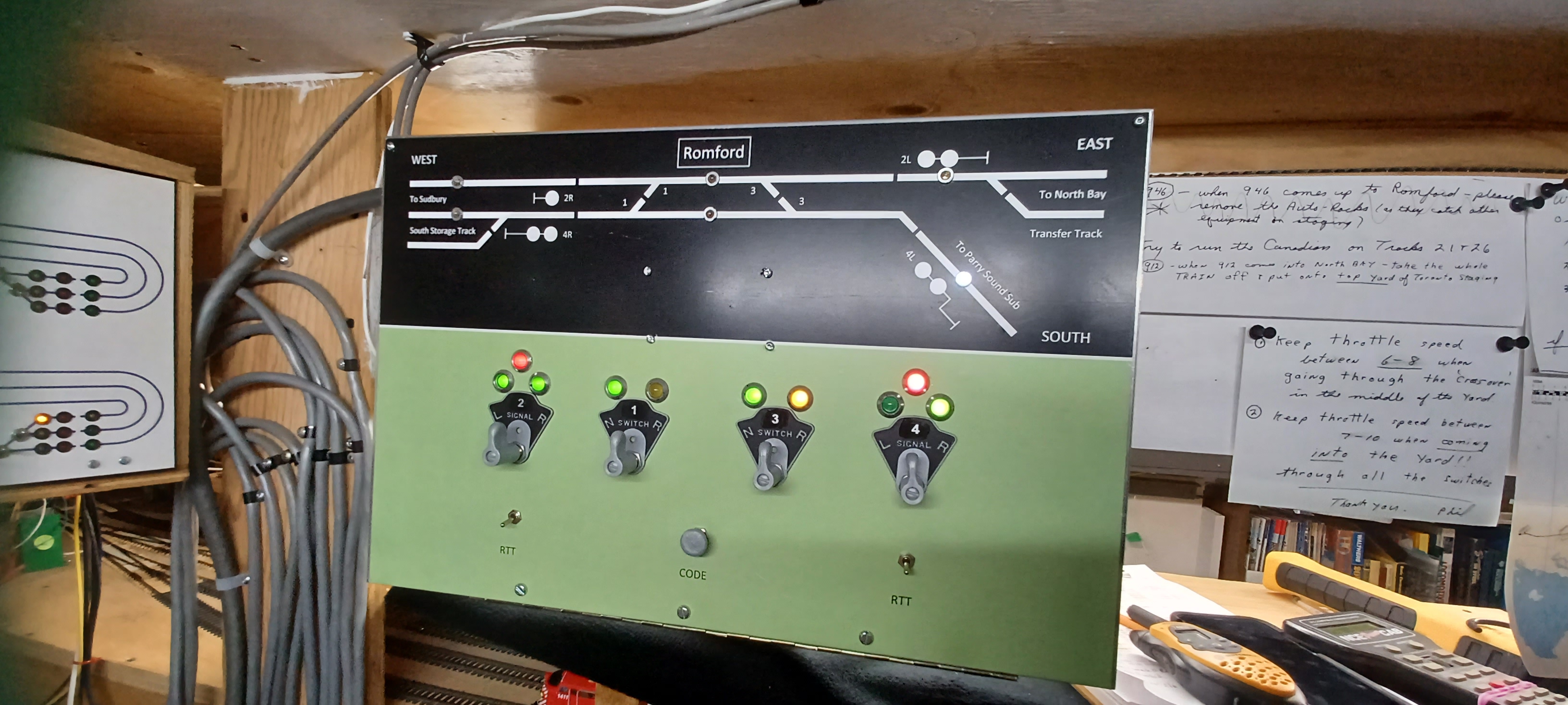
However one thing we’ll leave you with is something the average person will probably not see on the tour. Our signalling/electronics staff have been busy over the past months as well, and one of the more visible projects (for those of us working behind the scenes) they’ve completed is the Romford operator’s local control panel. If it looks to you like a CTC interlocking panel, that’s because the real one did too.
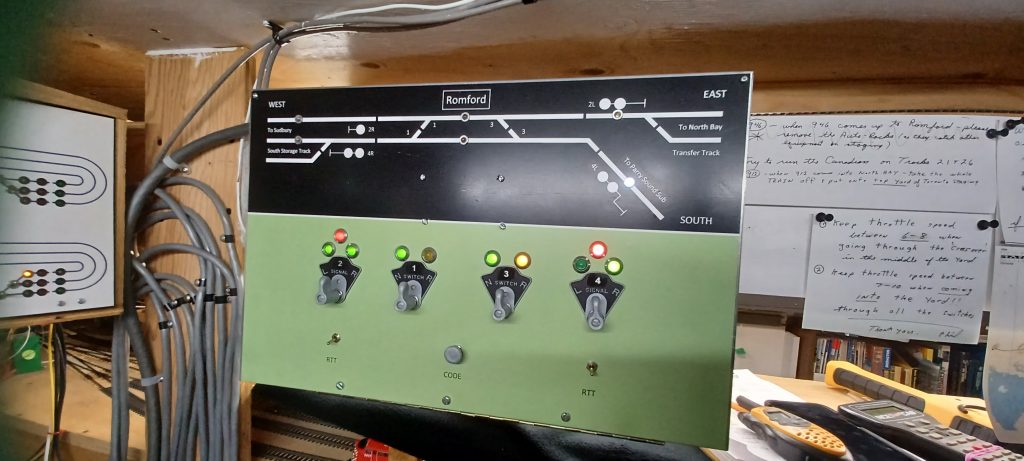
20240309_171659

The local control Operator’s panel, mounted within the Parry Sound Sub staging yard / Romford Operator ‘mole’ position. It is located under the layout by the Romford junction scene.

The panel is not operational at the moment, as it and our signals are waiting on quite a bit of work before CTC can be fully implemented. But we are getting closer.

We’re looking forward to opening our doors to the public again, showing off all our latest efforts, and sharing ideas and stories with fellow modellers. That is really what our hobby is about after all. If you can’t make it, there is always our own Fall Open House to look towards, or next year’s Doubleheaders Tour. However if you plan on making it out this April the 6th, all that we’ve shown here will be there for you to see. That and around 30 other layouts to tour. Hope to see you then.
100_2860


WRMRC Fall Open House – Saturday 14 October 2023

The Waterloo Region Model Railway Club cordially invites you to our Fall Open House on Saturday October 14th, 2023.

Here is your chance to see everything we have been working on over the past year.

Header_TK4

The layout be open from 10:00 AM to 5:00 PM. Feel free to invite any friends or family members interested in model railways, and plan on a fun day of train watching and socializing.

For maps and more information visit our WRMRC website, or our Facebook page.

X5025E_LaSalleBlvd

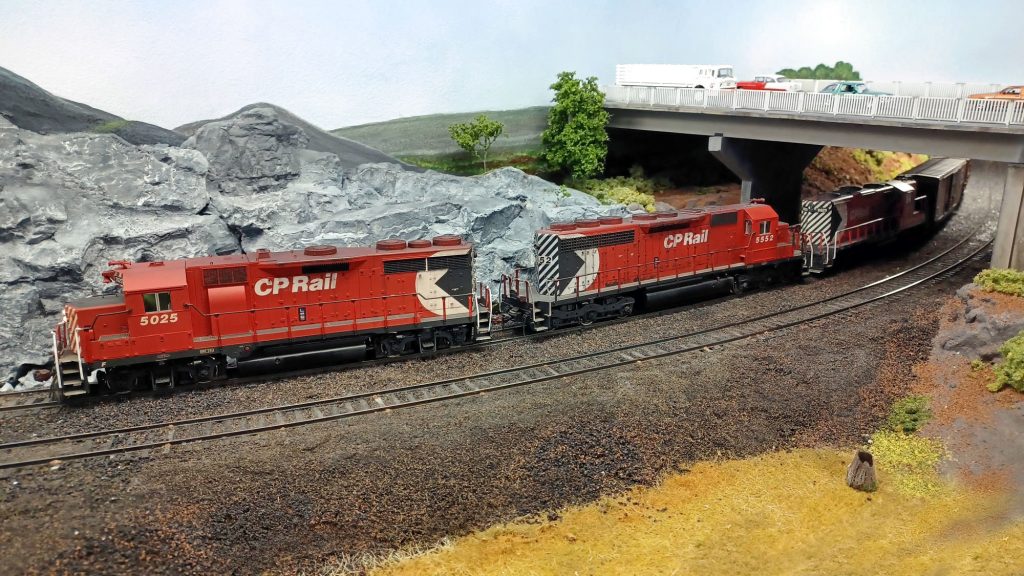
Extra 5025 East rolls under the LaSalle Blvd bridge on the CP Sudbury Division Layout.

Admission:

  • Adults: $5.00
  • Seniors and Students: $3.00
  • Children (12 and under) are FREE, but must be supervised by an adult


Begin/End CTC Romford

Our big push for the Doubleheaders Tour this past March was to finally fill in the scene at Romford ON, the junction where the Parry Sound Sub from Toronto joins in to the Cartier Sub. This finally enclosed and hid the helix we had built in this corner of the layout that carried the tracks from the Parry Sound Sub staging yard to the upper level deck where Romford is situated. But really the scenery was just roughed in at the time, and many more details were required to finish the area. Our upcoming Fall Open House has provided us with a cause to continue the scenic efforts from here further down towards Coniston ON (diamond crossing with the CN Bala Sub), and to populate Romford with more details.

Romford cabride CP train 12 - 06 October 1971

Approaching Romford junction in the cab of the Toronto Section of the ‘Canadian’ at Sudbury, ON on 06 October 1971 (Roger Puta photo – Marty Bernard collection)

Being a mainline junction, Romford was a controlled interlocking. In the 1970s Centralized Traffic Control (CTC) governed train movements over the Cartier Sub from this point (mileage 72.4) eastward to North Bay ON (mileage 0). Westward for the six miles between here and Sudbury, the Cartier Sub was double-tracked with Automatic Block System (ABS) signals protecting movements in one direction only (right-hand running). The Parry Sound Sub travelling south was single-track ABS territory. Because the CTC section began, or ended (depending on which way you were going) at this interlocking, dispatchers would refer to this spot as ‘Begin/End CTC Romford’.

Beyond the obvious signals, real life interlockings are filled with all sorts of trackside details such as large signal bungalows, relay cabinets, battery vaults, electric switch motors, and if you’re railroading in Canada; switch heaters, and associated fuel tanks. With this in mind, we felt further enhancement of this scene should be done before our next open house.

RomfordCTC001

Looking east from signal 724 – Romford. From this point east to North Bay, the CP Cartier Sub was CTC territory.

RomfordCTC002

Signal 724 and its companion dwarf signal, along with a GRS model 5H dual-control switch motor, an oil-fired switch heater (it gets very cold here in winter), and signal relay cabinet. The old-school switch stand here guards a storage track, which is obviously controlled manually by crews.

We are still waiting for the actual station to be completed, along with a custom-built cantilever signal bridge that is required to elevate signal 1217 over the Parry Sound Sub (both are in development). But in the mean time with telephone poles added, more vegetation and ground cover, and all these interlocking details, we are at a level where Romford can almost be called complete.

RomfordCTC003

Guarded by signal 723 (westward signals are odd-numbered, and eastward even) this area of the junction is full of assorted CTC details. The Parry Sound Sub to Toronto is the line curving to the south here. A cantilever signal bridge that governs this line will be added in the future.

RomfordCTC004

Signal 723 with associated relay cabinet and a battery vault. The manual switch stand here controls the Romford set-off track.

RomfordCTC005

Not just CTC details, we’ve also finished off the swamps surrounding the Parry Sound Sub’s approach into Romford. Oh, incidentally, don’t drink the water here.

We’re starting to get excited about the open house, and wanted to share these photos of our progress. There are many other additions and improvements we’ve made since the Doubleheaders Tours this past spring, let alone last year’s open house. All of this will be here for you to explore this Saturday October 14th. Hope to see you there.


WRMRC at Breslau Train Show – Sunday 24 Sept 2023

The Waterloo Region Model Railway Club will have a display at the Breslau Model Train Show this coming Sunday, Sept 24th, 2023.

Some of you may remember this as the former Paris Train Show. It may have a new location, but it is still the same great show presented by the Western Ontario Division – Niagara Frontier Region NMRA. There will be more than 75 tables of manufacturers and retailers available, and at least five operating layouts on display. Also there will be NMRA craftsmen showing how they build their models, free public clinics, and door prizes. More information can be found here: https://www.wod-nmra.ca/upcoming-events/

IMG_20211128_115747

Our display will feature club photos, a video presentation, and club members working on various modelling projects. As always, we will also have a side table with surplus models and equipment for sale. If you are attending the show please stop by and pay us a visit.

Hope to see you there.

Rapido TOFC Flatcars and Trailers

An order deadline is coming up soon for some very important models required by Canadian rail-modellers in general, and for us working on the CP Sudbury Division layout specifically. These are for Rapido Trains’ latest announcement of CP and CN specific piggyback flatcars, along with 26ft and 45ft Canadian-built Can-Car and Trailmobile trailers to haul on these flats. Basically, if you are modelling any mainline of either of Canada’s two principle railways between the late 1960s to the early 2000s, you need these models. Or for that matter if you’re a US mainline modeller in that era, you may want to pick up one or two of these piggyback flatcars as well.

Rapido's Marine Industries CP 63ft piggyback flat plus 45ft Trailmobile trailer, weathered by Bob Fallowfield.

Rapido Trains pre-production samples of the Marine Industries CP 63ft piggyback flat plus 45ft Trailmobile trailer, weathered by Bob Fallowfield.

It seems not a lot has changed in modeller’s perceptions of flatcars since we published these lines in a previous blogpost regarding the Wheels Of Time CP Napanee Flat:

Flatcars are probably the most under-appreciated pieces of rolling stock in the world of railway modelling. Due to their being, well, ‘flat’, they appear very simple and lack the visual impact of a boxcar or covered hopper. But they are actually among the most specialized cars around, possibly second only to tank cars. This under-appreciation is likely why we still need more flatcar variety in model production.
Jason Shron has found this out firsthand, as he’s had to relaunch these flats due to much lower than expected sales commitments prior to the initial order deadline. In a recent Rapido newsletter, he reported that hobby shop owners told him many customers had expressed concerns about the prices.
Rapido_Flat_002

Rapido’s Jason Shron isn’t lying when he says there’s an insane level of detail on these TOFC flatcars. Just click on this photo and look at it.

Sadly, but not surprisingly to us, many hobbyists hold this unfounded perception that because flatcars are smaller than boxcars they should somehow cost less. This thinking is complete and utter rubbish.

The cost of producing these trailer-on-flat-car (TOFC) piggyback flats are actually higher than a standard boxcar. Due to the high level of detail on a smaller footprint, there are higher tooling cost involved, and thus a higher unit cost when compared to a typical boxcar. Adding to this, Rapido’s flatcar body is largely diecast metal with etched-metal grilles. This is much more difficult to work with than plastic.

Rapido_Flat_004

You appreciate the level of detail even more with an overhead view.

In our opinion, we are actually getting a break on the pricing since Rapido is trying to hold the cost of these TOFC flatcars in relation to their other recently released freight car models.

Rapido_Flat_003

Not just piggyback flats, Rapido’s Canadian dry-van trailers are great models too. This is their 45ft Trailmobile van with side-door in CP Rail colours, weathered by Bob Fallowfield.

So Rapido has attempted to reach out to Canadian modellers on the complexity of these flatcars and trailers, and we at the WRMRC are doing our part. As the Sudbury Division was (and remains) an integral mid-section of the Canadian Pacific transcon route across Canada, we need quite a lot of these TOFC flats. Large blocks of TOFC flatcars would be seen on our priority freights, along with some potentially being hauled on a few manifest trains too.

5517 5602 14mar81 TEllis

Exhibit ‘A’ in our need for the Rapido TOFC flat. A hot eastbound freight receives train-orders by the Sudbury Division HQ building on 14 March 1981. Behind the stock cars and lone container flat, we see what is surely a long string of CP TOFC flats. (Mike Cleary photo)

The extended deadline for ordering these models is July 17, 2023. You can order these through your favourite hobby shop, or direct from Rapido.

Link for the CP and CN piggyback flatcars is here: https://rapidotrains.com/ho-scale/freight-car/canadian-piggyback-flatcar.html

Can-Car and Trailmobile trailers are here: https://rapidotrains.com/vehicle/can-car-trailmobile-trailers.html

To answer any US modellers who wonder if these Canadian TOFC flatcars ever operated south of the border, that’s a most definite yes. CP Rail cars were naturally operating on the joint CP-SOO intermodal Chicago-Toronto run-throughs that travelled across Michigan, Indiana and Illinois. I also distinctly remember seeing these CP 505xxx-series cars on Conrail ‘TV’ trains back in the day, mixed in sporadically within the large collections and various models of TTX piggyback flats. Additionally Rapido has posted a photo of them operating in California, so they definitely got around.

CP 505747 at Hinsdale IL 20May89 M.J.Budo photo

Photo evidence of a CP 505xxx-series piggyback flat operating in the USA. CP 505747 at Hinsdale IL on 20May89. (M.J.Budo photo)

Before closing, we’d like to thank fellow CP Rail aficionado Bob Fallowfield for sharing these Rapido pre-production models with us. This is all a part of our mutual need to see these flats and trailers become a reality. We managed to take a few model shots on our recently sceniced Romford junction section of the layout too.

Tail-end of train 965 exiting Parry Sound Sub

CP 505625 brings up the tail-end of train 965 exiting the Parry Sound Sub at Romford ON on the CP Sudbury Division layout.

To close, here is a promotional video of the Canadian piggyback flatcar and trailer re-launch, in the usual humorous tradition of Rapido Trains.

Don’t feel too bad for Bob here either, he has a history with pilferage of railway property.

Fallowfield_Theft

Not so fast with those brass cabooses Bob!